
How to Reduce Microplastic Exposure: What Actually Works
Cut microplastic exposure with science-backed steps. The Wellness Quality Institute explains what works, what doesn't, and how to start today.
Read articleMicroplastics are in your blood and lungs — but are they harmful? The Wellness Quality Institute grades the science and shows what reduces exposure.

Written by: Scott Steveson, Specialist, Wellness Quality Institute
Researchers have now found plastic particles in nearly every human sample type they have examined. A 2019 case series led by Philipp Schwabl, published in the Annals of Internal Medicine, found microplastics in the stool of all eight healthy volunteers tested. In 2021, Ragusa and colleagues reported microplastics in human placenta, with 12 particles across four of six placentas. That finding suggests that fetal exposure may begin during a very vulnerable window of development. A 2022 study by Leslie and colleagues at Vrije Universiteit Amsterdam detected plastic particles in the blood of 17 of 22 healthy donors.
Nihart and colleagues published one of the most discussed recent studies in Nature Medicine in 2025. They reported microplastic and nanoplastic accumulation in human brain, liver, and kidney tissue from postmortem samples. The highest concentrations appeared in brain tissue and were predominantly polyethylene in nanoscale shard-like fragments. The same study found the heaviest loads in samples from individuals with documented dementia diagnoses and reported that brain plastic concentrations rose roughly 50% across samples spanning 1997–2024. Those results drew wide attention, and they also drew scrutiny. A commentary in the same journal raised concerns about contamination controls and validation in the analytical approach. Brain tissue is one of the hardest materials to measure accurately for this purpose, so these findings count as early evidence rather than settled science.
These studies use small samples, and several have drawn methodological criticism. They clearly establish that plastic particles can reach human tissues. They do not yet prove that those particles cause specific diseases.
Established: Multiple independent research groups have detected plastic particles in human tissue and fluids. Across the literature, two biological responses appear most consistently: oxidative stress and systemic inflammation, reported in most studies included in a recent rapid systematic review.
Suspected: Observational human studies have reported possible links between microplastic exposure and digestive, reproductive, respiratory, and cardiovascular outcomes. A 2026 systematic review in the Journal of Xenobiotics synthesized 14 human studies on cardiovascular outcomes. It concluded that current evidence suggests a possible association between micro- and nanoplastics and cardiovascular disease, but graded the certainty of evidence as very low across all outcomes because of small samples, observational designs, inconsistent methods, and residual confounding. A 2026 systematic review in the International Journal of Environmental Research and Public Health found possible associations with adverse reproductive and obstetric outcomes, yet reached the same conclusion about insufficient data for causation. Reproductive, respiratory, and neurological effects remain in the suspected category. Mechanisms look plausible, but human causal evidence does not yet exist.
Speculative: Cancer causation remains unproven. A 2026 review in Translational Cancer Research found no prospective human cohort study showing that microplastic exposure causes cancer or changes prognosis. The authors suggested a cautious model in which microplastics may influence tumor biology rather than act as a primary cause.
The World Health Organization’s 2019 assessment, Microplastics in Drinking-Water, described low concern based on the limited evidence available and called for more research. WHO has not issued a numeric health-based threshold for microplastics in drinking water, and as of 2026, no country has set a legally binding maximum contaminant level.
Explore practical ways to reduce plastic exposure and see how verification supports credible claims.
Two separate questions often get blended together, and that blend creates confusion. The first question involves chemical additives in plastics, such as phthalates and bisphenols. These chemicals are well established as endocrine-disrupting compounds, with evidence from animal studies, human clinical observation, and population research summarized in the Endocrine Society Scientific Statement. Endocrine disruption means these chemicals interfere with the body’s hormone signaling, and that effect has decades of data behind it.
The second question involves the physical microplastic particles themselves. Additives describe what plastic is made with. Microplastic particles describe what plastic breaks into over time. The evidence base for additives is far more mature than the evidence base for particles. Treating them as equivalent leads to overstated claims about particle risks.
Current evidence does not support detox-style promises. A 2026 narrative review in Nutrition and Metabolic Insights concluded that clinical detoxification claims are not justified until well-designed human trials and standardized analytical protocols exist. Larger particles that never cross the intestinal wall likely leave the body in stool. Particles that move into tissues, especially nanoscale fragments, have no validated removal pathway at this time. Popular approaches such as sauna routines, fasting for autophagy, or supplement stacks have not been shown to remove plastic particles from human tissue. Nutritional strategies like higher dietary fiber may plausibly shorten the time material spends in the gut, but direct human evidence that they increase microplastic excretion is not yet available.
The label “microwave-safe” refers to heat tolerance and structural integrity. It tells you whether a container will warp or melt, not whether it sheds particles. Heat and mechanical stress speed up how plastics break down. Scientists do not yet have precise answers about how many particles a specific container might release into food under everyday use. Avoiding plastic for heating food is a reasonable precaution, even though it cannot guarantee zero exposure.
Glass or ceramic avoids direct plastic contact during heating, which is a sensible small shift. The change does not erase overall exposure, because people encounter microplastics through air, water, food, and dust. It does remove one controllable source at very low cost. The realistic goal is informed reduction through practical choices.
Studies have generally found more microplastic particles in bottled water than in tap water. The packaging itself, especially bottle caps, appears to be a meaningful contamination source. A 2018 study led by Sherri Mason at the State University of New York at Fredonia, published in Frontiers in Chemistry, found contamination in 93% of 259 bottled water samples across eleven brands. Particle concentrations were roughly twice those found in tap water, and polypropylene from bottle caps was the most common polymer identified. For tap water, a 2018 study by Kosuth, Mason, and Wattenberg in PLOS ONE found anthropogenic particles in 81% of 159 tap water samples across five continents. Neither source is free of particles.

A 2024 PNAS study by Qian and colleagues used a novel imaging technique and estimated about 240,000 particles per liter of bottled water, roughly 90% of which were nanoplastics. That headline number drew intense attention and a follow-up commentary that flagged contaminated blanks and weak quality control. The study illustrates both the potential scale of nanoplastic presence and the need to read striking figures alongside their critiques.
Plastics now exist in air, water, soil, and household dust, so complete avoidance is not realistic. The most useful goal is to reduce higher-exposure situations with simple, repeatable habits. The highest-confidence practical steps from current research include the following actions.
The Wellness Quality Institute does not recommend or endorse specific filtration products. For filtration decisions, look for independent, transparent performance data instead of relying on marketing language.
Gaps in measurement shape what anyone can honestly claim. Some water authorities use a broad definition of microplastics: solid polymeric material with particles at least 1 nanometer and less than 5,000 micrometers across in three dimensions. That range is wider than any current analytical method can reliably measure.

Two published analytical methods each cover a validated range. Infrared spectroscopy is validated for particles from 50 to 5,000 micrometers. Raman spectroscopy is validated from 20 to 5,000 micrometers. The 1–20 micrometer fraction is not validated under either method, and everything below that range is currently beyond reliable commercial measurement. The example definition reaches down to 1 nanometer, while the best validated methods begin at 20 or 50 micrometers, which are thousands of times larger.
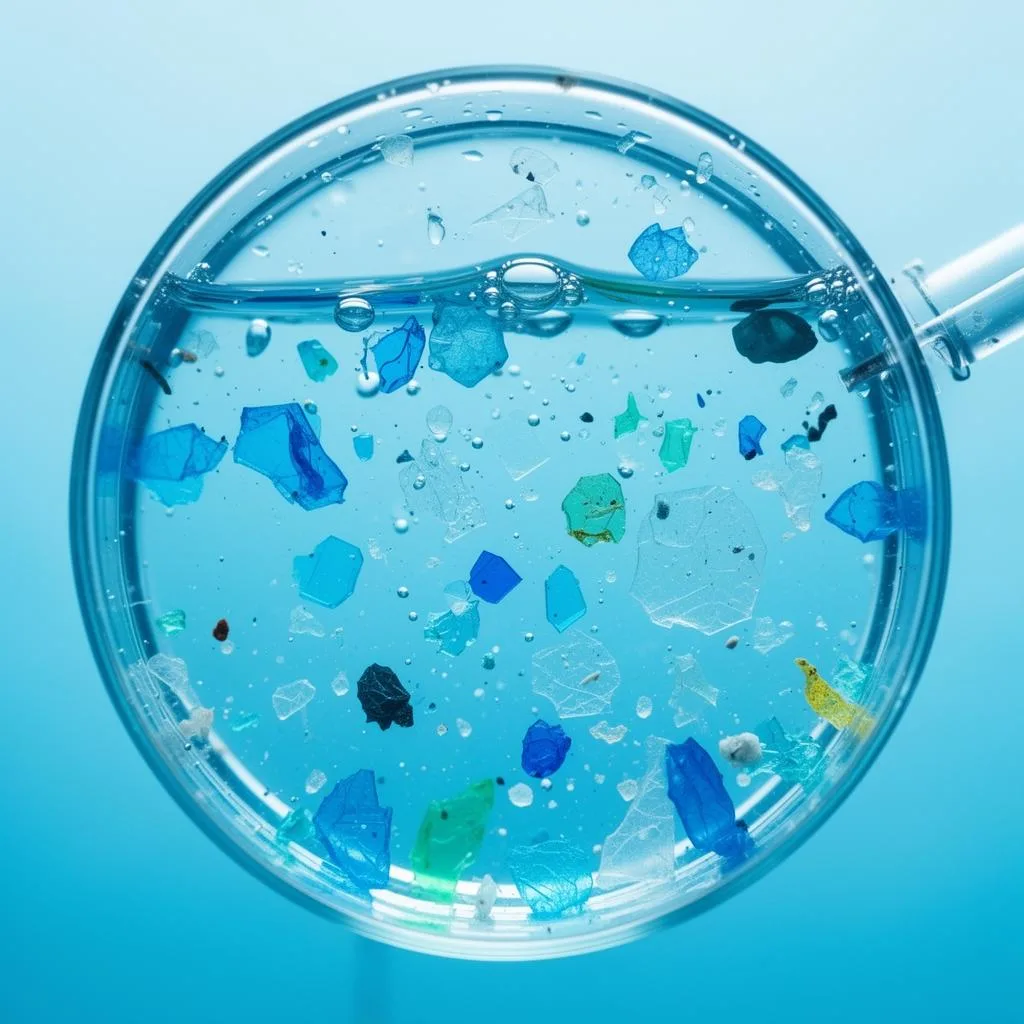
These limits explain why “none detected” means none found above that instrument’s detection floor, for the polymers it screened, in the lot it tested. The phrase does not describe what the method could not see. A 2026 review in Microplastics and Nanoplastics confirmed that no consensus exposure thresholds or clinically actionable internal-burden cutoffs currently exist. Without robust dose-response data, meaningful quantitative risk characterization remains out of reach.
That measurement gap creates a second problem for companies. A lab report can be accurate and still be used to support a claim it does not actually prove.
The Wellness Quality Institute exists to close the gap between real laboratory data and defensible market claims. The Wellness Quality Institute (WQI) is an independent verification body. It reviews companies’ existing third-party laboratory data on plastic and microplastic content against a defined standard, WQI-CS-01, the Plastic-Free Pathway Verification standard. That standard aligns with an example microplastics reference framework used in the field. The framework serves as a technical reference point. It does not define geography, and verification is available to US companies nationwide. The framework did not create, approve, authorize, or endorse WQI or its standard.
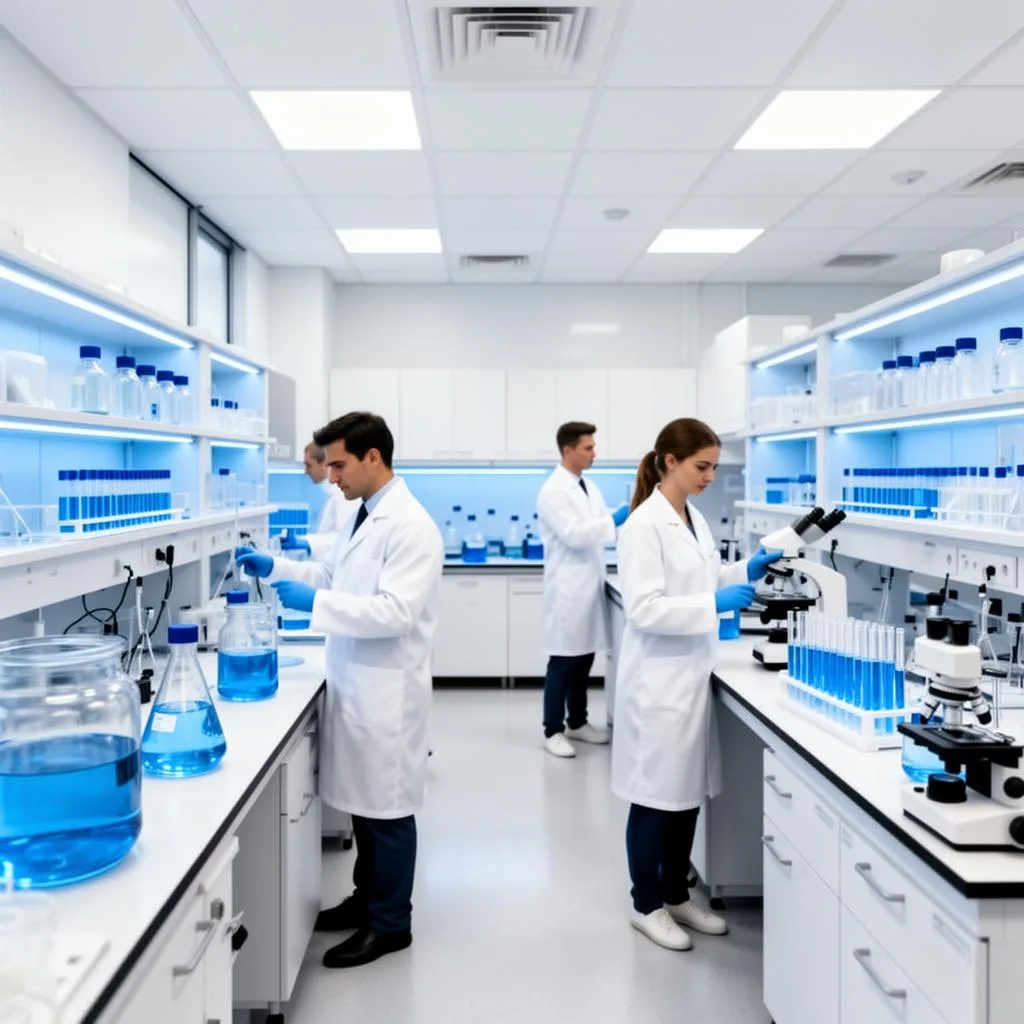
WQI does not run laboratory tests and does not certify that any product is free of plastic. No laboratory today can confirm the complete absence of plastic across every particle size, polymer type, and production lot. That technical limitation is the reason WQI focuses on verified progress rather than absolute purity.
Every review ends in one of two outcomes. Standard Met comes with a verification decision, a scope-locked license to use the WQI mark, a public registry listing, and approved claim language. Standard Not Met remains private and is never described as a failed product. Companies can resubmit with updated information. Each verification decision applies only to the reviewed product, dataset, tested particle-size range, polymer panel, and production or sampling period. One assessment fee covers the review, the decision, and the registry listing. Independent laboratory testing is arranged and billed separately by a qualified independent laboratory. Paying the assessment fee does not guarantee a verification decision. Phase 1 focuses on water and suitable simple-liquid products, and verification is currently available to US companies only.
The mark, “WQI Plastic-Free Pathway Verified,” is named with care. “Pathway” signals progress along a route rather than arrival at a final destination. The program reflects the reality that current methods cannot fully measure, much less guarantee, a plastic-free state. A company on this pathway is not claiming its product is plastic-free. It is showing, through independently reviewed evidence, that it is making verifiable progress toward that standard.
See how independent verification can support a defensible plastic-reduction claim for your products.
WQI Plastic-Free Pathway Verification does not certify that a product contains zero plastic, microplastics, or nanoplastics. It shows that the company is on a verified pathway toward plastic-free standards. Verification applies only to the reviewed products, submitted datasets, tested ranges, polymer panels, production or sampling periods, and supporting controls. WQI verification is not a government approval, government certification, or health or safety certification.
Most people have no way to measure this outside a research setting. The detection studies described here, which examine stool, blood, placenta, and brain tissue, are research projects on small groups using specialized equipment. They are not routine diagnostic tests. As of 2026, no standard clinical test exists that a person can request from a doctor to measure personal microplastic burden, although a consumer home blood test and some private-pay services have appeared. These studies show that exposure is widespread across populations. They do not allow individuals to know their exact load, which is why experts focus on population-level exposure reduction rather than personal scores.
Scientists do not yet have a definitive answer. Plastic particles have been detected throughout the human body, and laboratory and animal studies point to plausible mechanisms of concern, especially oxidative stress and systemic inflammation. Some observational human studies suggest possible links with cardiovascular and reproductive outcomes, but they are small, mostly cross-sectional, and cannot prove causation. The chemical additives in some plastics, such as phthalates and bisphenols, are well-established endocrine disruptors, yet that evidence addresses additives rather than the physical particles themselves. The World Health Organization reached a cautious conclusion in its 2019 assessment of drinking water, noting low concern on limited evidence and calling for more research.
The phrase always sits inside technical limits. “None detected” means none were found above that instrument’s detection floor, for the polymers it screened, in the lot it tested. A method validated above 50 micrometers cannot see anything smaller, so a “none detected” result can coexist with particles below that size. The result also reflects which polymers the method can identify and the specific production batch sampled. A clean result on one lot does not guarantee the next lot will match it. Independent review of the method and scope behind a result matters as much as the result itself, which is why no honest laboratory report can promise that a product is plastic-free.
Current research has generally found higher microplastic particle counts in bottled water than in tap water, with the packaging, particularly bottle caps, as a likely contamination source. Tap water still contains particles, so it is not particle-free. For people concerned about microplastic exposure from drinking water, filtered tap water is usually a lower-exposure option than bottled water based on current evidence. Actual performance depends on the filter technology and what independent testing shows it removes. Marketing claims on filters deserve the same level of scrutiny as any other plastic-related claim.
No laboratory today can prove that statement across all particle sizes, polymers, and production lots. Available analytical methods have defined detection floors, which describe the smallest particle size they can reliably measure. The best validated methods begin at 20 or 50 micrometers, while some regulatory definitions of microplastics extend down to 1 nanometer. Everything in between remains unmeasurable by commercially available methods. A “none detected” result is always limited by the method’s range, the polymers it screens, and the production lot it tests. Lot-to-lot variability means a clean result today cannot guarantee the same result tomorrow. The limitation is technical rather than a matter of insufficient diligence. A company that claims its product is plastic-free is asserting more than current science can support, which is why the defensible claim is one that accurately reflects what the reviewed evidence shows.
Health Impacts

Cut microplastic exposure with science-backed steps. The Wellness Quality Institute explains what works, what doesn't, and how to start today.
Read article
BPA-free doesn't mean microplastic-free. The Wellness Quality Institute explains what the label covers and how to reduce your exposure.
Read article
The Wellness Quality Institute breaks down the real science on microplastics and brain health. Get evidence-based answers and practical steps today.
Read article