
How to Reduce Microplastic Exposure: What Actually Works
Cut microplastic exposure with science-backed steps. The Wellness Quality Institute explains what works, what doesn't, and how to start today.
Read articleThe Wellness Quality Institute breaks down the real science on microplastics and brain health. Get evidence-based answers and practical steps today.

Written by: Scott Steveson, Specialist, Wellness Quality Institute
Learn More About Microplastic Reduction And Plastic-Free Pathway Verification
Coverage of microplastics and brain health often sits at two extremes. One set of headlines claims human brains contain a “plastic spoon’s worth” of particles and hints at looming neurological disaster. Another group of commentators labels the underlying studies “debunked” and dismisses the entire topic. Very little coverage explains what the research actually found, where it falls short, and how a reasonable person can use the information.
That polarization has a real cost. Readers who cannot weigh competing claims often swing between panic and resignation, which both block informed decisions. A more useful approach applies graded evidence, separates established facts from speculation, and names the methodological disputes instead of ignoring them.
Nihart et al., published in Nature Medicine in 2025, analyzed postmortem human tissue from 52 people. Researchers collected frontal cortex brain samples at autopsy in early 2016 and early 2024, along with matched liver and kidney specimens from the same donors. The study reported microplastic and nanoplastic accumulation in all three tissue types. Brain concentrations ran roughly 7 to 30 times higher than matched liver or kidney samples.
That brain signal was dominated by polyethylene, the material used in single-use plastic bags, food packaging, and bottle caps. It appeared mainly as nanoscale, shard-like fragments generally less than 200 nanometers long. Average brain concentrations were approximately 3,345 micrograms per gram in 2016 samples and 4,917 micrograms per gram in 2024 samples. That pattern suggests roughly a 50 percent increase over eight years. The study also observed that donors with documented dementia diagnoses carried the heaviest microplastic loads in brain tissue.
Several features of the study design limit what anyone can infer from it. The samples came from deceased individuals, not living patients, so the findings describe a snapshot rather than a disease process unfolding over time. The sample sizes were small, with 28 brains from 2016 and 24 from 2024. The study was observational and reported what was present, without showing why particles accumulated or what they did once present.
The word “debunked” in some coverage refers to a published methodological critique by Monikh et al., also in Nature Medicine, in 2025. That correspondence raised two main concerns about the Nihart et al. study, both of which can be explained in everyday language.
The first concern involves contamination control. When researchers measure microplastics in tissue, they work in laboratories that contain plastic in the air, in containers, and in reagents. They run procedural blanks, which are control samples that go through the same preparation as real tissue but contain no tissue. If those blanks pick up plastic, a positive result may reflect the lab environment rather than the organ being studied. The Monikh et al. critique argued that the Nihart et al. paper did not clearly document how it prevented or corrected for this problem.
The second concern involves interference from lipids, or fats. The human brain is about 60 percent lipid by dry weight. The main analytical method used in the Nihart et al. study, pyrolysis gas chromatography-mass spectrometry (Py-GC-MS), identifies polymers by heating them and analyzing the resulting chemical fragments. Long-chain fatty acids can produce signals that resemble the signature of polyethylene. Because polyethylene was the dominant polymer reported in brain tissue, and because brain tissue is so rich in lipids, the critique raised the possibility that some of the signal came from natural brain fats rather than plastic.
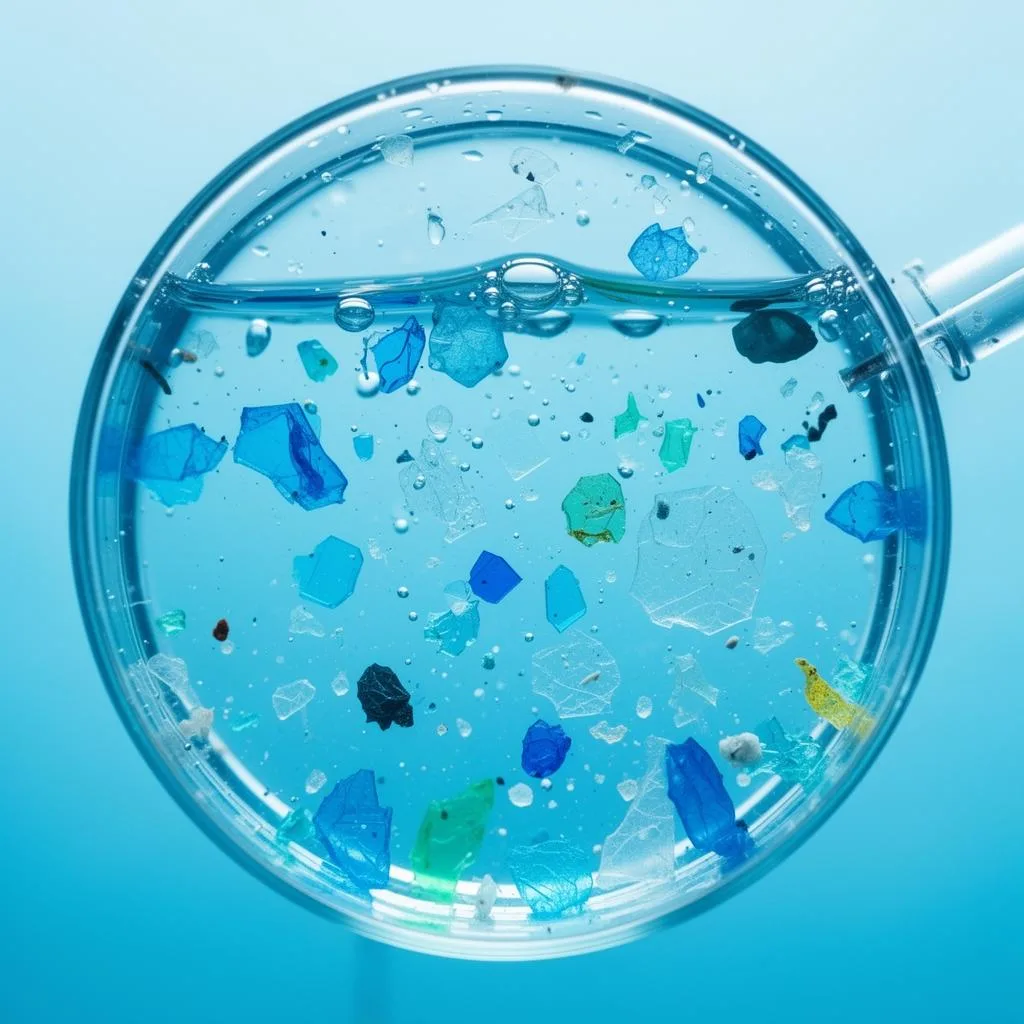
The Nihart et al. authors responded by pointing to agreement across three independent detection methods, the use of contamination controls, and consistency across multiple samples. A 2026 study by Xiaolin Chen at Beijing Tiantan Hospital used strict plastic-free protocols and filtered-water blanks across 156 brain tissue samples. That work found microplastics in nearly all samples but at a median concentration roughly 100 times lower than the Nihart et al. figure. The contrast shows how strongly methodological choices can influence reported concentrations.
The honest verdict is straightforward. The Nihart et al. finding is a real published result, and its precision as a measure of true tissue burden remains genuinely contested. “Debunked” overstates the case. A more accurate description is “disputed on methodological grounds, with the dispute unresolved.” That distinction matters because it highlights what the field needs most: validated, reproducible measurement methods that the broader scientific community can accept.
Laboratory and animal studies have proposed several ways microplastic particles might affect the brain. A rapid systematic review of microplastic exposure effects identified oxidative stress and systemic inflammation as the two most consistent pathways across the literature. Animal studies have also described microglial activation, which is an immune response in the brain, mitochondrial dysfunction, and disruption of protein clearance mechanisms.
A 2026 study in Advanced Science found that chronic oral exposure to polystyrene microparticles accelerated Alzheimer-like changes in a transgenic mouse model. The authors proposed a mechanism that ran through disruption of the gut microbiome and depletion of taurine, an amino acid involved in cell protection.
These findings come from laboratory and animal models. They show biological plausibility, meaning they outline credible routes by which microplastics could affect brain function. They do not show that these mechanisms operate in humans at real-world exposure levels. Researchers have not yet identified an agreed symptom profile in humans linked to microplastic burden, and no clinical diagnosis currently rests on it.
The observation in the Nihart et al. study that dementia-diagnosed donors carried three to five times more brain plastic than donors of similar age without dementia drew significant media attention. That association does not support a causal conclusion, and the study’s own authors stated this clearly: “Atrophy of brain tissue, impaired blood–brain barrier integrity and poor clearance mechanisms are hallmarks of dementia and would be anticipated to increase MNP concentrations; thus, no causality is assumed from these findings.”
Reverse causation remains a strong possibility. Dementia-related damage to the blood-brain barrier, the specialized cellular layer that usually limits what enters the brain, may allow greater particle accumulation. In that case, the disease would make the brain more permissive to plastic rather than plastic driving the disease. A third factor could also drive both processes. The cross-sectional design of the study, which captures a single moment instead of following people over time, cannot separate these possibilities.
A 2026 systematic review in Cureus by Parihar et al. screened 266 manuscripts and found only four human studies that met its criteria on microplastic exposure and neurological outcomes. The authors concluded that emerging findings suggest possible accumulation of microplastics in the human central nervous system, but a direct causal relationship with neurodegeneration cannot yet be confirmed. The human evidence base remains early, based on small samples, limited locations, and in some cases contested methods.
Two separate questions often get merged in coverage of plastics and health. Keeping them distinct helps clarify what the evidence actually supports. The table below sets these questions side by side to show how differently the evidence stacks up for each.
| Question | Evidence Base | Confidence Level | Key Sources |
|---|---|---|---|
| Do plastic additives (phthalates, bisphenols) pose health risks? | Mature; spans animal models, human clinical observation, and epidemiology | Well-established as endocrine-disrupting compounds | Endocrine Society Scientific Statement |
| Do microplastic particles themselves pose health risks? | Early; small samples, varied methods, some contested approaches | Plausible mechanisms; human evidence not yet settled | Nihart et al. 2025; Monikh et al. 2025 critique; WHO 2019 |
The chemical additives in plastics, including phthalates and bisphenols, are well established as endocrine-disrupting compounds, meaning they interfere with the body’s hormone systems. That conclusion rests on evidence from animal models, human clinical observation, and epidemiology, as documented in the Endocrine Society’s scientific statement. The physical microplastic particles themselves form a newer and far less settled question. One question concerns what plastics are made with. The other concerns the particles they break into. Confidence in the first area does not automatically extend to the second.
See How Independent Verification Separates Additives From Particles
That distinction between additives and particles also frames the World Health Organization’s 2019 assessment, Microplastics In Drinking-Water. WHO examined three potential hazard routes: the physical plastic particles themselves, the chemical additives associated with them, and micro-organisms that may attach to particle surfaces.

On the limited evidence available at the time, WHO reported low concern for each route, while stressing that this conclusion rested on incomplete information and that more research was urgently needed. That framing, which ties the level of concern to the strength of the evidence and clearly states what remains unknown, still represents the most defensible public-health position. Later research has added detail and raised new questions, but it has not yet produced the kind of human epidemiological evidence that would justify a very different conclusion.
There is currently no established method to remove microplastic particles already accumulated in human tissue. No clinically validated approach exists for flushing microplastics out of the body. Therapeutic plasma exchange, a clinical procedure that filters blood plasma, has shown some ability to reduce circulating microplastics in the bloodstream in early research. However, a 2026 study in the Journal of Clinical Apheresis concluded that researchers cannot yet assess whether plasma exchange efficiently reduces total body burden, because the relationship between tissue-deposited particles and circulating particles remains unclear. The procedure also introduced additional microplastics from the plastic tubing used in the apheresis circuit.
Any product or protocol that claims to detox or flush microplastics from the body is making a claim current science does not support. The evidence instead supports exposure reduction. The following measures reduce ongoing intake, although they cannot be expected to affect particles already present in tissue.
Plastic containers degrade with heat and time and release particles into food and drink. Glass or stainless steel offers a practical alternative for storage and reheating. This switch does not remove every exposure source, but it removes one controllable source from a longer list that no one can fully control.
The methodological disputes described above, including blank controls, lipid interference, detection limits, and polymer panel selection, are not obscure technical footnotes. They explain why a laboratory result cannot simply be accepted at face value and why independent review of that result matters.
The Wellness Quality Institute, introduced here in full for clarity, is an independent verification body that reviews companies’ existing third-party laboratory data on plastic and microplastic content against a defined standard, WQI-CS-01. That standard aligns with the California State Water Board’s drinking-water microplastics reference framework, which is one of the most stringent public references available for this type of testing. California serves as a technical reference point rather than a geographic boundary, and verification is available to US companies nationally. California did not create, approve, authorize, or endorse the Wellness Quality Institute or its standard.

The Wellness Quality Institute does not run laboratory tests, and it does not certify that any product is free of plastic. No laboratory today can confirm the complete absence of plastic across every particle size, polymer type, and production lot. The California regulatory definition reaches down to 1 nanometer, while the best validated analytical methods begin at 20 or 50 micrometers, which are thousands of times larger. That gap explains why the Wellness Quality Institute exists. Its differentiator lies in what it is willing to claim and in the limits it is willing to respect.
A single assessment fee covers review, verification decision, and registry listing, with no separate mark-license or registry fee. Independent laboratory testing is arranged and billed separately by a qualified independent laboratory.
WQI Plastic-Free Pathway Verification does not certify that a product contains zero plastic, microplastics, or nanoplastics. It shows that the company is on a verified pathway toward plastic-free standards. Verification applies only to the reviewed products, submitted datasets, tested ranges, polymer panels, production or sampling periods, and supporting controls. WQI verification is not a California approval, government certification, or health or safety certification.
Get Your Laboratory Data Independently Verified
Microplastics and nanoplastics have been detected in human brain tissue in postmortem studies. Laboratory and animal studies suggest plausible mechanisms, including oxidative stress, neuroinflammation, and disruption of protein clearance, by which particles may affect brain function. Human evidence remains early, based on small postmortem samples and partly contested methods. No causal relationship between microplastic exposure and brain damage has been established in humans, so concern is reasonable while the science continues to develop.
No. As covered above, researchers have not validated any method to remove accumulated particles from human tissue. Plasma exchange may reduce circulating microplastics in the bloodstream, but its effect on total tissue burden is unknown. The evidence-based approach focuses on reducing ongoing intake through practical changes to food storage, water source, and diet.
As discussed above, postmortem studies have found higher microplastic concentrations in brain tissue from donors diagnosed with dementia. That association does not establish causation. The disease may make the brain more permissive to plastic rather than the reverse, and the overall human evidence base remains early and limited.
It means none were found above that instrument’s detection floor, for the polymers it screened, in the lot it tested. A method validated for particles above 50 micrometers cannot detect anything smaller. “None detected” can therefore coexist with particles being present below that size threshold, in polymer types not included in the test panel, or in production lots that were not sampled. It is a bounded statement about what one method found on one occasion. Understanding that boundary is why independent review of the method behind a result matters as much as the result itself.
Microplastics contamination and brain health now generate alarming headlines and sharp dismissals, which often leave readers without a grounded sense of what is actually known. The 2025 Nihart et al. findings in Nature Medicine are real published results, and their accuracy as measures of true tissue burden remains under active debate. The dementia association is an observation that cannot be read as proof of cause. Evidence on plastic chemical additives is mature, while evidence on physical microplastic particles is still developing. Researchers have not yet validated any method to remove accumulated particles from human tissue, so the practical focus remains on reducing ongoing exposure.
The Wellness Quality Institute serves as an independent verification body that reviews laboratory data against a defined standard and refuses to claim more than the evidence supports. In a category full of overstatement, that restraint is the core value it offers.
Partner With A Verification Body That Refuses To Overclaim
Health Impacts

Cut microplastic exposure with science-backed steps. The Wellness Quality Institute explains what works, what doesn't, and how to start today.
Read article
BPA-free doesn't mean microplastic-free. The Wellness Quality Institute explains what the label covers and how to reduce your exposure.
Read article
The Wellness Quality Institute cuts through the noise on nanoplastic health risks. See what science actually proves — and what you can do now.
Read article