
BPA-Free Bottles Still Have Microplastics: What to Know
BPA-free doesn't mean microplastic-free. The Wellness Quality Institute explains what the label covers and how to reduce your exposure.
Read articleCut microplastic exposure with science-backed steps. The Wellness Quality Institute explains what works, what doesn't, and how to start today.

Written by: Scott Steveson, Specialist, Wellness Quality Institute
Learn How The Wellness Quality Institute Verifies Real Progress Toward Plastic-Free Standards.
This list ranks the most effective ways to cut microplastics in your body and daily environment, based on clear underlying mechanisms.
These five changes target the four mechanisms responsible for most household microplastic exposure. The sections below explain the reasoning behind each one, so you can generalize to situations this guide does not cover, and they are the most consistently recommended actions across the peer-reviewed literature.
See How The Wellness Quality Institute Verifies Real Progress Toward Plastic-Free Standards.
Heat speeds up the physical breakdown of plastic and releases particles into whatever touches that plastic. “Do not microwave plastic” appears across public health guidance for this reason. The same principle applies to any situation where plastic meets heat, not just the microwave.
A 2023 study by Hussain et al. in Environmental Science & Technology found that three minutes of microwaving polypropylene and polyethylene food containers released up to 4.22 million microplastic and 2.11 billion nanoplastic particles per square centimeter of container surface. That is a worst-case figure. The study used water and acetic acid instead of real food, and the measurement is per square centimeter of surface, not per meal. The direction of the finding matches the broader literature: heat dramatically increases particle release from plastic.
The same heat-driven release shows up in three everyday kitchen habits, each with a different plastic-to-heat contact point:
The practical fix stays the same in each case. Move food or liquid out of plastic before you apply heat, or switch to glass, ceramic, or stainless steel containers.
A 2018 study by Mason, Welch, and Neratko in Frontiers in Chemistry found microplastic contamination in 93% of 259 bottled water samples across eleven brands, at about twice the particle concentration of tap water. The most common polymer was polypropylene, the plastic used in bottle caps. This points to the packaging as a major contamination route, not only the water source.
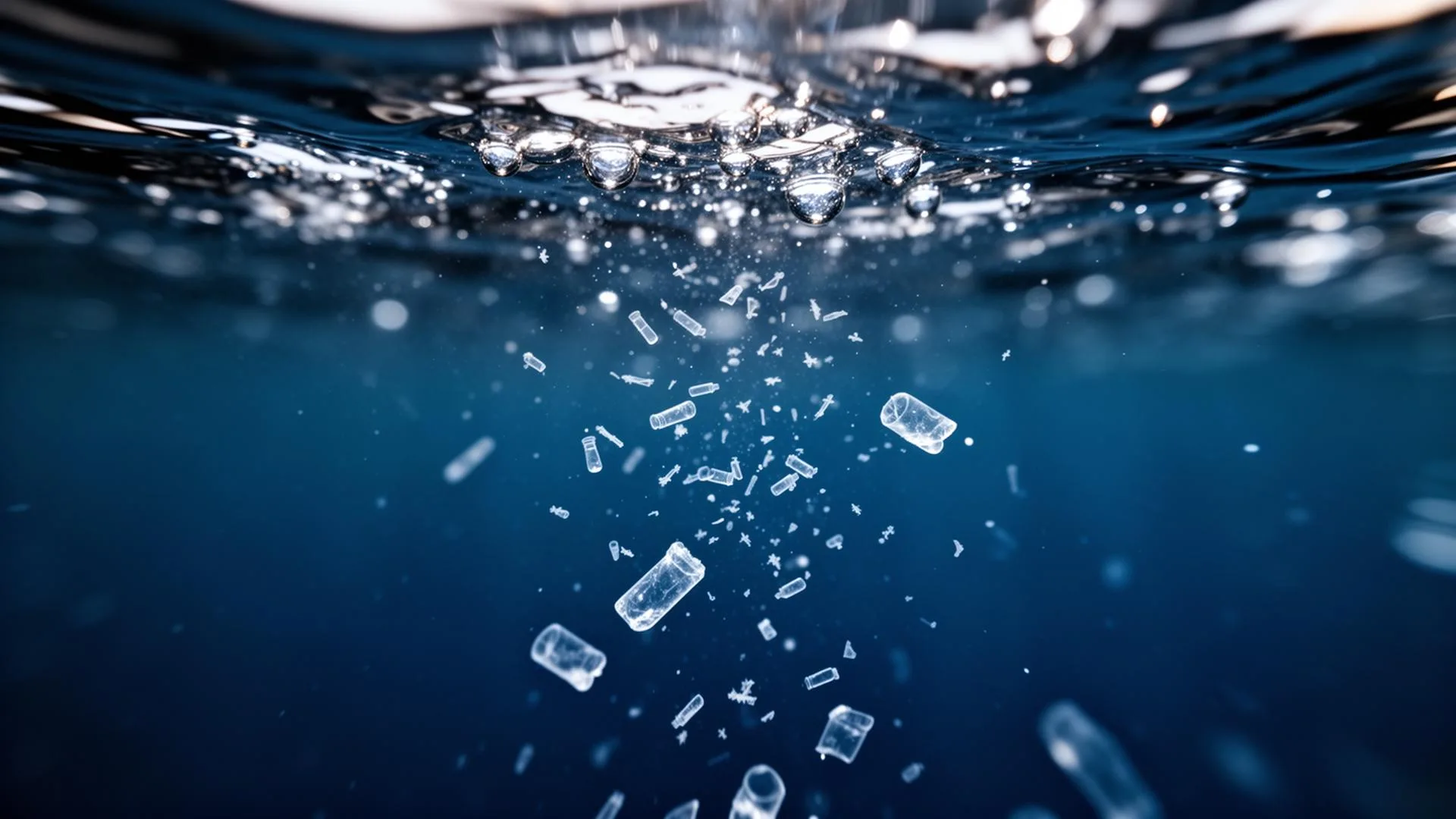
Tap water also contains particles. A 2018 study by Kosuth, Mason, and Wattenberg in PLOS ONE detected human-made particles in 81% of 159 tap water samples from five continents. Evidence still shows that switching from bottled to tap, where tap water is safe to drink, lowers particle exposure instead of raising it. The next step is deciding whether a home filter improves on that baseline or mainly changes taste.
Standard Brita-style pitcher filters use granular activated carbon plus ion-exchange resin. These materials improve taste, reduce chlorine, and address some metals. They are not built to physically strain out microplastic particles.
Granular activated carbon works through adsorption, which means contaminants stick to the porous carbon surface. It does not act like a tight mesh. The pore paths through loose carbon are irregular and large enough for smaller particles to pass.
A 2023 study in Polymers found that a point-of-use filter using granular activated carbon and ion-exchange resin began releasing previously trapped PET fragments back into the water once it reached 75% of its rated capacity. At that point, particle levels in the filtered water exceeded those in the incoming water.
Filter claims work best when you focus on the mechanism, not the marketing language. A “removes microplastics” claim should come with clear details. Filters with a tight membrane pore size of 0.2 microns or smaller block particles by size, instead of relying on adsorption. Strong claims come with independent, transparent performance data that specify particle size and polymer type. A standard carbon pitcher improves taste and some chemicals. It does not provide a reliable barrier against the smallest microplastics.
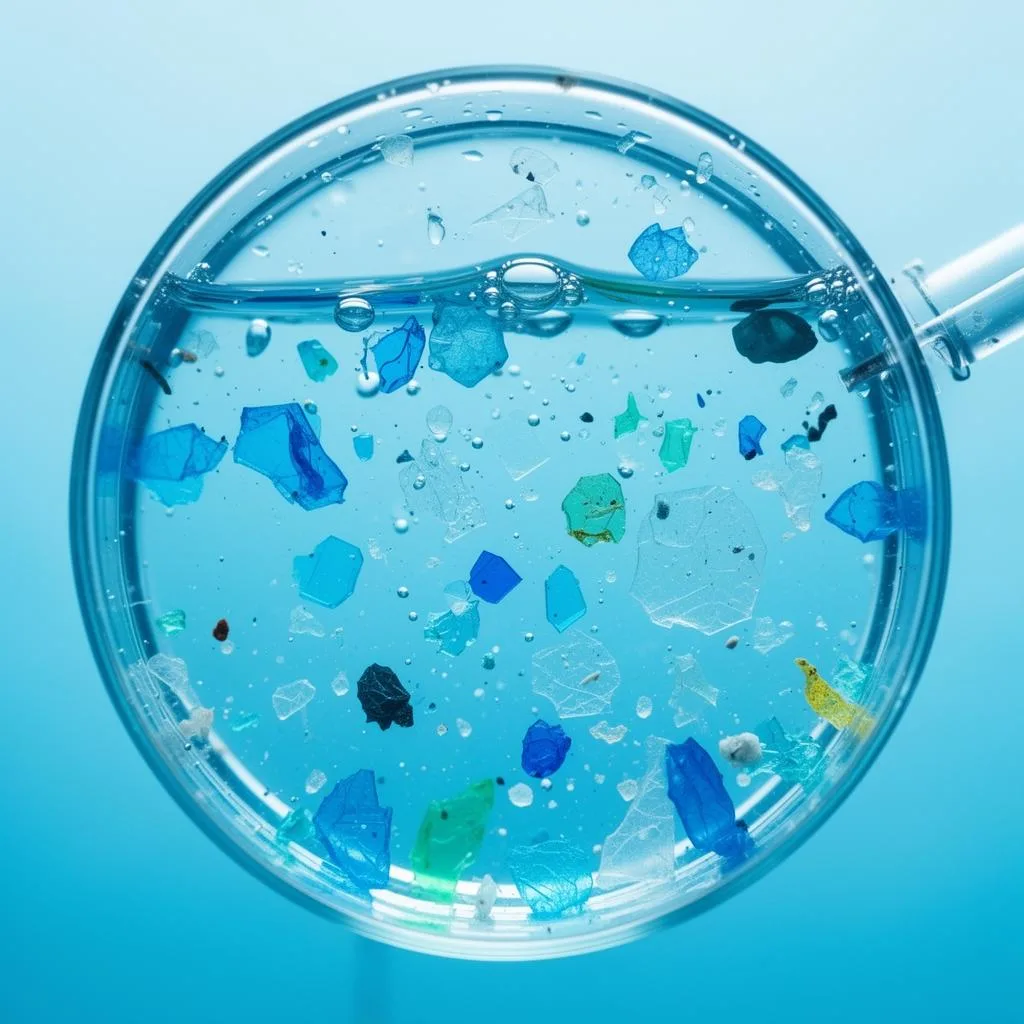
Cutting, scraping, and stirring on plastic surfaces shed particles directly into food. This abrasion mechanism differs from heat and still operates at room temperature.
A 2023 study by Yadav et al. in Environmental Science & Technology estimated that routine chopping on a polypropylene cutting board generates 14.5–71.9 million microplastic particles per person per year, and around 79.4 million from a polyethylene board. The study used a controlled chopping protocol and extrapolated to annual figures. Real kitchens vary, yet the direction is clear. Every knife stroke on a plastic surface releases particles.
Abrasion also drives particle release from three other kitchen items, each involving repeated mechanical contact:
Simple swaps help. Choose wood or bamboo cutting boards, stainless steel or silicone utensils, and glass or stainless steel storage containers. The aim is to reduce direct contact between plastic and food during cutting, stirring, or heating, rather than to reach absolute zero.
Synthetic textiles such as polyester, nylon, and acrylic shed microfibers with every wash. This shedding is a major route of microplastic release into wastewater, and many guides only touch on it briefly.
A 2016 study by Napper and Thompson in Marine Pollution Bulletin found that a single 6 kg domestic wash released roughly 138,000 to 728,000 synthetic microfibers, depending on fabric type. Acrylic shed the most, and polyester-cotton blends shed the least among the fabrics tested.
Wastewater treatment captures many of these fibers, but not all. The fibers that escape persist in the environment. Indoor air also matters, because synthetic textiles shed fibers during everyday wear and movement, not only in the washing machine.
These actions reduce shedding:
Plastic particles move into food when food stays in contact with plastic packaging, especially under heat. Longer contact, higher temperature, and fattier or more acidic foods all increase transfer.
Plastic tea bags are a clear example. A 2019 study by Hernandez et al. in Environmental Science & Technology found that a single nylon or PET pyramid tea bag steeped at 95°C released about 11.6 billion microplastic and 3.1 billion nanoplastic particles into one cup. The researchers brewed empty bags and measured release into water, not health effects after drinking. Even so, these counts rank among the highest measured for a single kitchen habit. Loose-leaf tea with a stainless steel infuser removes this source entirely.
Other practical ways to avoid microplastics in food through contact-route changes include:
The goal is fewer direct contact points between food and plastic, especially with heat, fat, or acidity. You can make steady improvements without turning every meal into a source of stress.
Get Your Company’s Plastic-Free Pathway Verified.
Current evidence does not support claims that supplements, cleanses, or “detox” products remove microplastics from the body. Marketing dominates this part of the conversation, while science remains limited. Clear decisions about how to reduce microplastics in your body start with a realistic view of what does and does not work.
The body has some natural clearance routes. Most ingested microplastics that do not cross the intestinal wall leave the body in stool as part of normal digestion. Some inhaled particles move upward through the lung’s mucociliary clearance system, a moving layer of mucus and tiny hair-like structures, and are then swallowed. The liver processes some particles. Particles that cross tissue barriers, including possibly the blood-brain barrier, do not appear to clear efficiently through these routes.
A 2026 study by Weinstein et al. in the Journal of Clinical Apheresis reported no established method for removing microplastic particles from the human body, apart from the small share that leaves through urine and feces. The study examined therapeutic plasma exchange, a medical procedure, and found that it reduced circulating microplastics only at higher starting levels. The plastic tubing used in the procedure also leached particles into the circuit.
A 2026 narrative review by Alotaishan et al. in Nutrition and Metabolic Insights concluded that nutritional approaches such as dietary fiber, gut-barrier support, and microbiome support should be viewed as plausible risk-mitigation tools, not proven ways to remove plastics from the body. The authors state that clinical “detoxification” claims remain unsupported until strong human trials and standardized lab methods exist.
On specific claims, sweating does not excrete plastic particles, because solid microplastics are far too large to pass through sweat glands. Some plastic-related chemicals such as BPA and certain phthalates have appeared in sweat in small older studies, but that reflects chemical movement, not particle removal, and those studies have clear limits. Activated charcoal, chlorella, spirulina, and similar supplements lack human clinical trial evidence for lowering microplastic body burden. The most evidence-supported strategy focuses on reducing ongoing intake, which lowers the constant load on the body’s limited clearance systems.
Indoor air creates a meaningful microplastic exposure route that many guides, including some AI-generated summaries, skip entirely. Household dust carries microplastic particles shed from synthetic textiles, upholstered furniture, rugs, and other plastic-based materials. These particles become airborne and can be inhaled or settle on food during cooking and eating.
A 2026 review by Rathee et al. in Sustainability reported that indoor air often contains much higher concentrations of microplastic fragments than outdoor air. Exposure risk peaks in small, poorly ventilated spaces. Main sources include synthetic textiles, home furnishings, rugs, and suspended household dust.
These steps reduce indoor exposure:
The World Health Organization’s 2019 assessment of microplastics in drinking water remains a clear summary of current evidence. The WHO examined three possible hazard routes: the physical particles, chemicals that travel with them, and micro-organisms that may attach to them. On the limited data available, the WHO found low concern for each route and called for much more research. That report came before newer detection methods that now find far higher particle counts. The call for more research reflects a real knowledge gap.
Detection methods can show that plastic is present. They cannot prove that plastic is completely absent. Finding a particle is relatively straightforward: isolate it, confirm that it is a polymer, and report it. Proving that no plastic is present is a much harder claim. It requires ruling out everything the method cannot see: particles below the detection floor, polymers outside the tested panel, and production lots that were never sampled. No laboratory today can confirm the total absence of plastic across all particle sizes, polymer types, and production lots.
The Wellness Quality Institute (WQI) exists to help companies navigate this gap. The Wellness Quality Institute reviews companies’ existing third-party laboratory data on plastic and microplastic content against WQI-CS-01, its Plastic-Free Pathway Verification standard, which aligns with the California State Water Board’s drinking-water microplastics reference framework. WQI reviews existing laboratory data rather than running its own tests, and it verifies progress toward plastic-free standards rather than certifying that a product is free of plastic. The California State Water Board’s reference framework serves as a technical benchmark, not a geographic limit, and verification is available to companies across the United States.
WQI Plastic-Free Pathway Verification does not certify that a product contains zero plastic, microplastics or nanoplastics. It shows that the company is on a verified pathway toward plastic-free standards. Verification applies only to the reviewed products, submitted datasets, tested ranges, polymer panels, production or sampling periods, and supporting controls. WQI verification is not a California approval, government certification, or health or safety certification.
No single source dominates microplastic exposure. Microplastics reach the environment and the human body through multiple routes. These include tire wear particles carried by road runoff, synthetic textile fibers shed during washing, degradation of plastic packaging, agricultural plastic films, industrial pellets, and ambient air deposition. The share from each route changes with geography, lifestyle, and how researchers measure particles. Exposure builds up across many sources instead of coming mainly from one.
Standard zip-top bags can release very small particles under laboratory conditions. A 2022 study by Zangmeister et al. in Environmental Science & Technology found that nylon bags, LDPE food-storage bags, and similar single-use plastics shed trillions of sub-100 nanometer particles per liter in contact with water. The study used purified water at controlled temperature and did not test what happens to those particles in the body. In everyday use, cold, dry food stored briefly in a zip-top bag creates less contact than hot or fatty food stored for long periods. The contact mechanism matches what the packaging section described, while the exact real-world magnitude remains less certain than the lab figure.
No established method exists for flushing or removing microplastic particles that have already entered tissues. The body excretes most ingested microplastics that do not cross the intestinal wall through normal bowel movements, which reflects digestion rather than a detox method. As noted earlier, the 2026 Weinstein et al. study found no established method for removing microplastic particles from the body, apart from the small share that leaves through urine and feces. No supplement, cleanse, sauna routine, or diet has been proven in human clinical trials to reduce microplastic body burden. Reducing ongoing intake remains the most evidence-supported approach.
Yes. As the water section explained, bottled water consistently shows higher particle concentrations than tap water, largely because of the packaging itself. Tap water still contains particles, yet switching from bottled to filtered tap water, where tap water is safe to drink, lowers overall exposure. Heat and long storage times increase release from plastic bottles further, because both temperature and time speed up particle migration into the water.
Health Impacts
BPA-free doesn't mean microplastic-free. The Wellness Quality Institute explains what the label covers and how to reduce your exposure.
Read article
The Wellness Quality Institute breaks down the real science on microplastics and brain health. Get evidence-based answers and practical steps today.
Read article
The Wellness Quality Institute cuts through the noise on nanoplastic health risks. See what science actually proves — and what you can do now.
Read article