
Supplier Compliance for Plastic Content: A US Brand Guide
The Wellness Quality Institute's document-by-document guide helps US brands verify supplier plastic content claims and stay compliant. Start here.
Read articleMake defensible plastic claims with confidence. The Wellness Quality Institute shows what evidence regulators expect. Start your review today.

Written by: Scott Steveson, Specialist, Wellness Quality Institute
Claim substantiation means you hold a reasonable basis, supported by objective evidence, for every express and implied claim before consumers ever see it. Under the FTC’s 1983 Policy Statement Regarding Advertising Substantiation, advertisers must possess that evidence before the claim runs. The “reasonable basis” standard asks what evidence a diligent, responsible marketer would hold before making the same claim.
Competent and reliable scientific evidence means tests, analyses, research, or studies conducted and evaluated objectively by qualified people, using accepted procedures that yield accurate and reliable results.
For plastic claims, this standard usually means third-party laboratory testing, documented supply chains, and real-world infrastructure data. Internal assumptions or unverified supplier assurances do not meet this bar.

The FTC Green Guides (16 CFR Part 260) explain how Section 5 of the FTC Act applies to environmental marketing claims. The Guides are guidance, not separate regulations, yet they show how the FTC evaluates deception and supports enforcement actions. Three principles matter most for plastic claims:
The Green Guides address specific claim types that affect plastic products: recyclable (§ 260.12), recycled content (§ 260.13), degradable or biodegradable (§ 260.8), and compostable (§ 260.7). Each category carries its own evidence rules.
Each plastic-related claim type requires different proof. The table below summarizes what you must hold before a claim goes live, followed by short explanations.
| Claim Type | Core Legal Standard | Evidence You Must Hold |
|---|---|---|
| Recyclable | Recycling facilities available to a substantial majority of consumers (60%+) where sold | Municipal recycling program data, material recovery facility (MRF) acceptance documentation, and population-availability calculations |
| Recycled content | Accurate percentage, with pre-consumer vs. post-consumer and scope (product vs. packaging) clearly stated | Supply chain documentation, mass balance records, supplier declarations, and calculation worksheets |
| Biodegradable | Complete decomposition within one year under customary disposal conditions | ASTM standard testing (for example, D5511 or D5526) or equivalent accepted methods |
| Compostable | Breakdown in a compost facility within the same timeframe as other compostable materials | ASTM D6400 or D6868 testing and third-party verification |
| Plastic-free / microplastic-free | Complete absence across all particle sizes and polymer types | Currently impossible to substantiate because no laboratory can prove complete absence |
A “recyclable” claim requires that the product or package can be collected, separated, and recovered through an established recycling program available to a substantial majority of consumers. The FTC generally interprets this as 60 percent or more of consumers where the item is sold. When access falls below that threshold, the claim must be qualified with language such as “recyclable in limited communities” or “check locally.”
Evidence includes current municipal recycling program data, MRF acceptance documentation, and population-availability calculations for the regions where the product is sold. This evidence must stay current. Several large MRFs removed plastic film from accepted streams between 2020 and 2024, so claims verified only a few years ago may now be inaccurate. Brands need periodic re-verification to keep recyclable claims defensible.
The Green Guides apply recyclability on an item basis. If part of a package is recyclable and part is not, the overall claim must reflect the least recyclable component or clearly identify the recyclable portion. A “100% recyclable” claim on a package with a recyclable bottle and a non-recyclable trigger sprayer fails this rule. The label must either address the trigger separately or adjust the overall claim.
Recycled content claims must state the percentage of recycled material accurately and clarify whether it is pre-consumer material, which is manufacturing scrap, or post-consumer material, which comes from used products. When only part of the product or package contains recycled content, the claim must identify that specific portion.
Evidence includes bills of materials, component weight data, supplier recycled content declarations, chain-of-custody records, and calculation worksheets. The calculation must match the scope of the claim. A claim about the bottle body cannot rely on data for the entire packaging system. A simple approach uses this formula: recycled content percentage equals recycled material weight divided by total item weight, multiplied by 100, applied only to the component covered by the claim.
An unqualified “biodegradable” claim requires evidence that the entire product will completely decompose within a reasonably short period. The FTC interprets this as one year after customary disposal. Most plastic items go to landfills, incinerators, or recycling facilities, which do not support full breakdown within that timeframe. Unqualified biodegradable claims for plastic products are therefore presumptively deceptive.
Evidence relies on ASTM standard testing, such as ASTM D5511 for anaerobic digestion or D5526 for simulated landfill conditions, or equivalent accepted methods. The FTC focuses on consumer understanding under customary disposal conditions, not on ideal laboratory conditions. Marketers must substantiate real-world breakdown, not best-case scenarios.
A “compostable” claim requires proof that all materials in the item break down into usable compost safely and in roughly the same timeframe as other compostable materials. Testing under ASTM D6400 for plastic products or D6868 for packaging with plastic coatings is the accepted standard. Unqualified claims suggest home compostability, so products that require industrial composting must say “compostable in industrial facilities” and explain that such facilities may not exist in all areas.
Infrastructure access plays a major role. A 2025 Sustainable Packaging Coalition study found that only 18.1% of the researched US population has access to programs accepting food waste and compostable packaging. Most plastic products that claim compostability therefore need clear qualification.
Absolute “plastic-free” or “microplastic-free” claims face a scientific barrier. No laboratory can prove complete absence across all particle sizes, polymer types, and production lots. Current validated methods detect particles only above 20 or 50 micrometers, which leaves the entire nanoplastic range, meaning particles smaller than one micrometer, outside reliable commercial measurement. A “none detected” result means none were found above that instrument’s detection limit, not that none exist.
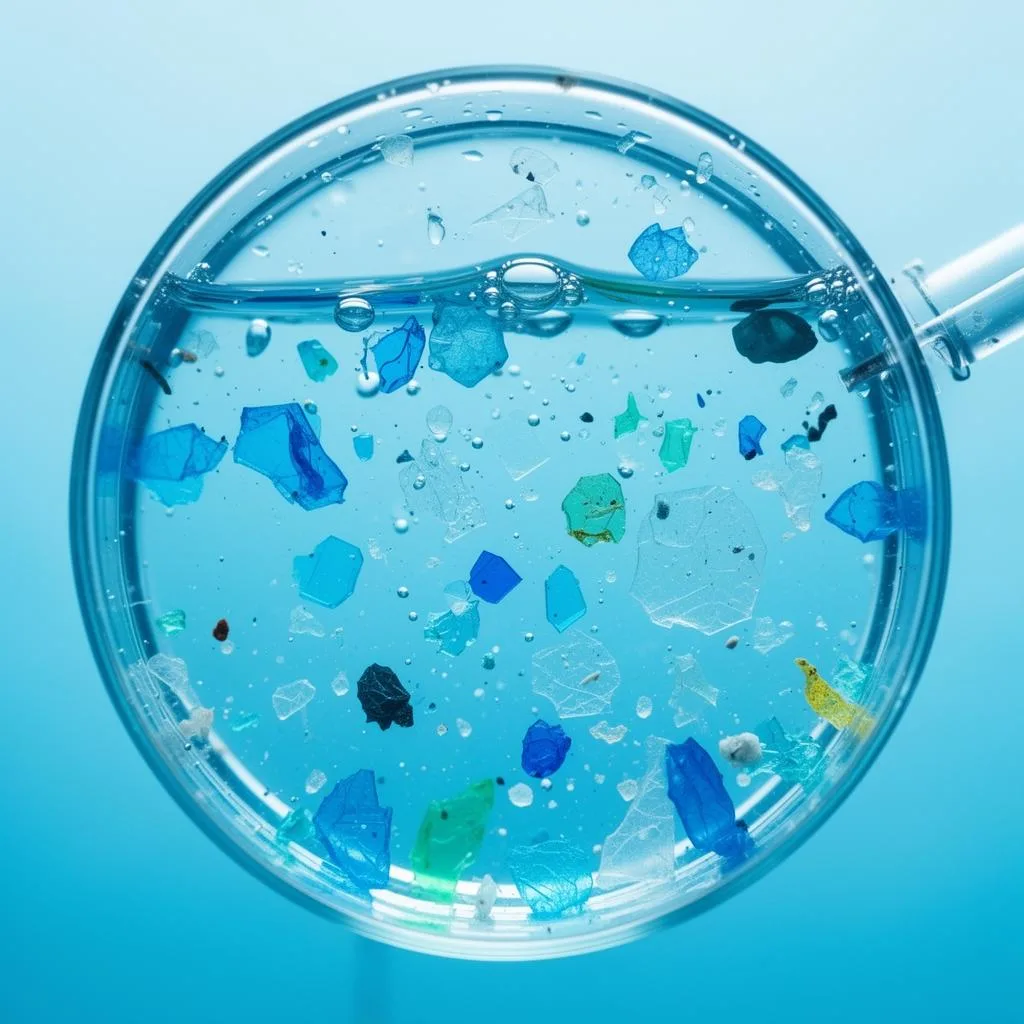
Any brand using these absolute claims would need a reasonable basis that covers the full product lifecycle and all relevant particle sizes. Current science cannot provide that level of certainty. A more credible approach focuses on verified progress toward plastic-free standards, supported by transparent lab data and clear scope.
The FTC evaluates reasonable basis by looking at the type of claim, the product, the consequences of a false claim, the benefits of a true claim, the cost of substantiation, and the amount of evidence experts consider reasonable. For plastic claims, this usually means third-party laboratory testing that follows accepted standards, not internal data or unverified supplier statements.
The evidence must exist before the claim appears, must be strong enough to support the specific wording, and must be evaluated objectively by qualified people. Marketers must consider both the literal words and what a reasonable consumer is likely to take away from the label.
Consumers react to the overall impression of a label, not just to isolated words. The FTC reviews the full presentation, including images, icons, and colors, to decide whether a plastic-related claim misleads people. Several patterns appear often in enforcement.
Qualifications must be clear, prominent, and close to the claim. Fine print or distant footnotes do not fix a misleading net impression.
A complete substantiation file should exist before the claim goes live. Brands should retain the following documents:
Assemble this file before the claim goes live. Substantiation created after a challenge does not satisfy FTC expectations, so the evidence must be in place when the claim first appears.
Several recurring mistakes drive enforcement actions and lawsuits against plastic-related claims.
California district attorney coalitions have secured $1 million from Walmart, $1.5 million from Amazon, and $500,000 from Costco for products labeled “biodegradable” or “compostable” by third parties. These cases show that retailers and distributors can be held directly liable for supplier environmental claims. Greenwashing and microplastics claims remain a leading source of consumer class actions, especially when labels use broad, unqualified, or implied health or sustainability claims. Claims without strong substantiation attract scrutiny, and regulators expect documentation to exist before the claim appears.
Laboratory data alone rarely satisfies retailers, regulators, or litigators. A lab report becomes a defensible market claim only after an independent reviewer checks whether the method fits the product, whether reporting limits are adequate, whether blanks and contamination controls were run, and what the data actually supports.

Independent review can come from an internal quality team or an external verifier. The Wellness Quality Institute, formally introduced as the Wellness Quality Institute in this article, offers one such external option. The Wellness Quality Institute reviews a company’s existing third-party laboratory data against a defined standard (WQI-CS-01) that uses the California State Water Board’s drinking-water microplastics framework as a technical reference. The Wellness Quality Institute issues scope-locked verification with approved claim language and a public registry listing. It does not test products or certify plastic-free states.
The Wellness Quality Institute Plastic-Free Pathway Verification does not certify that a product contains zero plastic, microplastics, or nanoplastics. It shows that the company follows a verified pathway toward plastic-free standards. Verification applies only to the reviewed products, submitted datasets, tested ranges, polymer panels, production or sampling periods, and supporting controls. The Wellness Quality Institute verification is not a California approval, government certification, or health or safety certification.
Claim substantiation requires a reasonable basis, supported by objective evidence, before any claim appears on a label or in advertising. For plastic-related environmental claims, this means laboratory reports, supply chain records, and infrastructure data must be complete before packaging artwork receives final approval. Substantiation assembled after a regulator or litigant raises a concern does not meet FTC expectations.
Recyclable claims depend on access to recycling facilities for a substantial majority of consumers, using the 60 percent availability threshold described earlier. Brands should maintain current municipal recycling data, MRF acceptance documentation, and population calculations, and revisit this evidence as infrastructure changes. When access drops below the threshold, the claim needs clear qualification.
No current laboratory method can prove complete absence of plastic across all particle sizes, polymer types, and production lots. Validated methods detect only larger particles, and “none detected” results simply reflect the instrument’s detection limit for that test. Because methods cannot rule out what they cannot see, absolute plastic-free or microplastic-free claims do not meet the FTC’s reasonable basis standard. A more defensible approach focuses on verified progress toward plastic-free standards, supported by transparent lab data.
Biodegradable and compostable claims describe different outcomes and rely on different tests. Biodegradable claims require evidence that the entire product decomposes within one year under customary disposal conditions, which usually means landfill conditions for plastic items. The FTC treats unqualified biodegradable claims for plastic as presumptively deceptive, and ASTM D5511 or D5526 testing is commonly used. Compostable claims require proof that all materials break down into usable compost in roughly the same timeframe as surrounding compostable materials, typically using ASTM D6400 or D6868 testing. Products that need industrial composting must say so and explain that access to facilities varies.
Certification suggests that a product fully meets a defined standard in an absolute way. Verification describes an independent review of evidence against clear criteria. The Wellness Quality Institute provides verification of reviewed laboratory data and documented progress toward plastic-free standards. It does not certify that a product is plastic-free. Every Wellness Quality Institute verification is scope-locked to the specific product, dataset, tested particle-size range, polymer panel, and production period. The public registry entry records exactly what was assessed so buyers, retailers, and journalists can confirm the scope.
Substantiating plastic-related environmental claims requires specific, well-documented evidence and careful wording. Brands need to understand what the FTC Green Guides require for each claim type, hold competent and reliable scientific evidence before claims go live, maintain a complete substantiation file, and use clear qualifications when infrastructure or conditions vary. Independent review then helps convert raw laboratory data into claims that withstand retailer diligence, regulatory review, and litigation.
Certification
The Wellness Quality Institute's document-by-document guide helps US brands verify supplier plastic content claims and stay compliant. Start here.
Read article
The Wellness Quality Institute's document-by-document guide helps US brands verify supplier plastic content claims and stay compliant. Start here.
Read articleThe Wellness Quality Institute's document-by-document guide helps US brands verify supplier plastic content claims and stay compliant. Start here.
Read article