
How To Make Defensible Sustainability Claims on Packaging
Avoid greenwashing risks. The Wellness Quality Institute helps you substantiate recyclable, compostable & plastic-free claims. Get verified today.
Read articleAvoid greenwashing lawsuits over plastic claims. The Wellness Quality Institute turns real data into defensible, FTC-compliant environmental claims.

Written by: Scott Steveson, Specialist, Wellness Quality Institute
The enforcement landscape has shifted quickly, and the sections below explain how that affects your packaging and marketing decisions.
The enforcement environment for plastic claims has changed sharply in the past few years. State attorneys general, private plaintiffs, and federal regulators now pursue plastic-related claims with intensity, and cases are resolving with meaningful penalties.
In August 2025, the Arizona Attorney General settled a consumer-fraud lawsuit against Reynolds Consumer Products over Hefty bags marketed under the name “Recycling.” The settlement required a nationwide packaging redesign, a front-of-box statement reading “These Bags Are Not Recyclable,” and $212,000 in payments. The triggering issue was the overall impression created by the product name, imagery of bags filled with bottles and cans, and phrases like “perfect for all your recycling needs.” The word “recyclable” never appeared, but consumers were led to believe the bags were.
In 2026, a state settled with Tractor Supply West LLC over products labeled “biodegradable,” treating the label language itself as the violation. In April 2026, a class action in the Western District of New York alleged that Keurig K-Cup pods are falsely advertised as recyclable because most U.S. recycling centers reject them due to size, shape, and multi-material construction.
One state’s Truth in Recycling Law takes effect for products manufactured on or after October 4, 2026, and it sets a new compliance floor for any brand selling into that state. A preliminary injunction issued in July 2026 limits enforcement against members of the plaintiff trade associations, but companies outside those groups remain exposed. Claims that once felt like a marketing risk now carry clear legal risk.
Given these pressures, brands need credible ways to prove real progress. The Wellness Quality Institute’s Plastic-Free Pathway Verification helps companies turn existing data into claims that regulators, retailers, and consumers can check.
The FTC Green Guides (16 CFR Part 260) set the main federal standards for environmental marketing claims. The FTC treats claims that contradict the Guides as presumptively deceptive under Section 5 of the FTC Act, so ignoring them creates direct legal exposure.
Under 16 CFR § 260.12, an unqualified “recyclable” claim is allowed only when recycling facilities are available to a substantial majority of consumers or communities where the item is sold. The FTC defines “substantial majority” as at least 60 percent. If access falls below that 60% rule, the claim must be qualified, and the qualification must become stronger as access drops.
Two examples from the Guides show the difference. A claim like “Recyclable where facilities exist” is deceptive when programs are not available to a substantial majority of consumers nationwide, because it hides limited availability. “Recyclable in the few communities with facilities for foam polystyrene cups” is acceptable when only a handful of metropolitan areas have collection sites, because it clearly states the limitation.
A common trigger involves the resin identification code. A conspicuous chasing-arrows number stamped on plastic containers counts as a recyclable claim under the Guides and needs qualification if facilities are not available to a substantial majority of consumers. A code placed inconspicuously on the bottom of a container does not carry the same implication.
Under 16 CFR § 260.13, recycled-content claims require proof that materials were genuinely diverted from the waste stream. This diversion can occur before consumer use, during manufacturing, or after consumer use. Unqualified claims are allowed only if the entire product or package, excluding minor incidental components, is made from recycled material. Partial recycled content requires a clear percentage by weight.
Pre-consumer material must qualify as waste that would otherwise have been discarded. Scraps that a factory routinely reuses in its own process do not count. The Guides also warn that a three-chasing-arrows symbol without explanation usually tells consumers that the product is both recyclable and made with recycled content. That dual message requires proof for both claims or clear qualification of each.
Under 16 CFR § 260.8, unqualified biodegradable claims require strong scientific evidence that the entire item will completely break down within about one year after normal disposal. Most plastic items go to landfills, incinerators, or recycling facilities where that level of breakdown does not occur. As a result, unqualified biodegradable claims for plastic products almost always violate the Guides.
California’s SB 343 shows where state-level regulation is heading. The law prohibits the chasing-arrows symbol and any recyclability statement on products manufactured on or after October 4, 2026, unless the packaging meets strict criteria. Those criteria include collection by programs serving at least 60% of California’s population, sorting by facilities serving at least 60% of programs statewide, and design rules such as no intentionally added PFAS above 100 ppm. PFAS are synthetic chemicals that resist breakdown and persist in the environment. The law applies to any brand that sells into California.
A preliminary injunction issued in July 2026 limits enforcement against members of certain trade associations. Companies outside those groups still face the October 2026 deadline. Violations of SB 343 can also support false advertising suits under California consumer protection laws, so private class action risk remains even when direct enforcement is uncertain.
California’s Environmental Marketing Claims Act already requires manufacturers that make recycled-content claims to keep written documentation and provide it to the public on request. California Assembly Bill 2253, now in its final legislative stages, would extend those documentation requirements to all products making recycled-content claims beginning January 1, 2030.
Other states are moving in similar directions. Pending legislation in New Jersey, New York, Oklahoma, and Massachusetts reflects a mix of California-style thresholds and broader rules on environmental marketing. Multi-state brands now face a patchwork that makes a single national claim strategy much harder.
Clear, specific claims survive scrutiny, while vague or absolute claims invite challenges.
Problematic claims include:
More defensible alternatives include:
The practical rule is simple. A claim narrow enough to be fully true is a claim that holds up when a regulator, retailer, or litigator reviews it.
The Arizona Hefty settlement shows that regulators look at the entire packaging presentation, including product name, imagery, color, and symbols. A bag named “Recycling” with images of bottles and cans created a misleading impression even without the word “recyclable” on the packaging.
The FTC Green Guides apply the same logic to symbols. A three-chasing-arrows symbol without explanation usually tells consumers that the product is both recyclable and made with recycled content, so brands must substantiate both messages. Recycling imagery, green color palettes, and nature-themed photography placed next to plastic claims function as implied claims and carry the same legal weight as explicit statements.
Third-party certifications also carry obligations. The FTC expects certifications to come from legitimate, independent organizations with public criteria, and the brand must actually meet the standard. Displaying a seal for a certification the brand does not hold is automatically deceptive. The scope of any certification must match the scope of the claim on the package.
To align your packaging with these expectations, the Wellness Quality Institute offers Plastic-Free Pathway Verification that links your symbols and language to reviewed, documented evidence.
To reduce the risk of greenwashing lawsuits, brands can adopt these five practices:
Brands that have already published plastic claims that may not withstand scrutiny are in a stronger position when they act before a regulator or plaintiff steps in. The Arizona Hefty settlement and similar actions show that regulators reward cooperation and penalize ongoing non-compliance.
If you have already published a risky claim, these steps can help you respond:
Brands that are genuinely reducing plastic use still face a communication challenge. They must describe progress accurately without making absolute promises that current science cannot support.
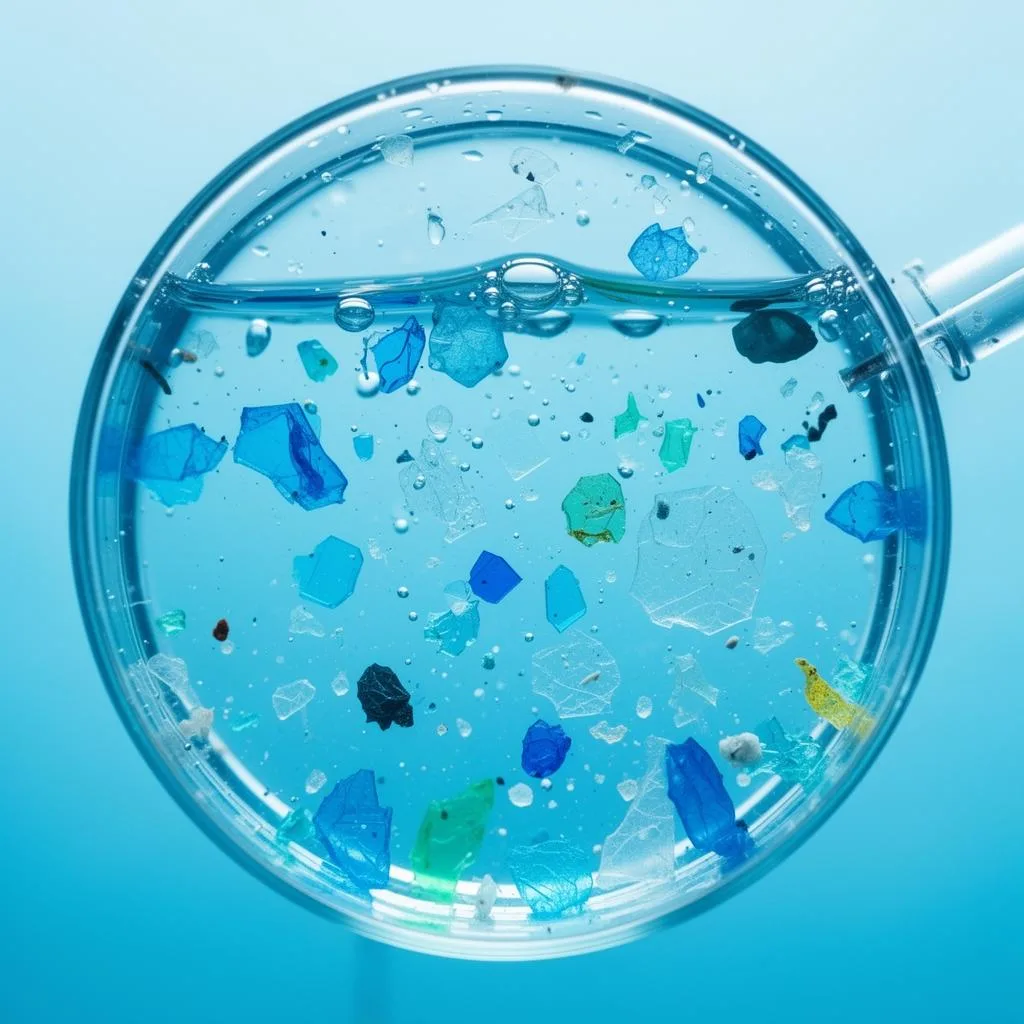
No laboratory can prove a product is completely free of plastic. Current methods cannot reliably detect particles below 20–50 micrometers, while the California regulatory definition of microplastics extends down to 1 nanometer. That measurement gap makes “zero plastic” claims indefensible.

Independent verification offers a practical middle path. The Wellness Quality Institute (WQI), formally known as the Wellness Quality Institute, is an independent verification body that reviews a company’s existing third-party laboratory data on plastic and microplastic content against a defined standard. This approach lets brands substantiate real progress toward plastic-free standards instead of making impossible zero-plastic claims. WQI’s core program, Plastic-Free Pathway Verification, reviews a company’s independent laboratory dataset, testing methodology, product scope, and supporting controls against criteria focused on particle size and polymer type, aligned with the California State Water Board’s drinking-water microplastics reference framework.
Every verified product receives approved claim language, a public registry entry, and a scope-locked verification that prevents a single dataset from being stretched across an entire product line. A single assessment fee covers the review, verification decision, and registry listing. There are no separate mark-license or registry fees. Independent laboratory testing is arranged and billed separately by a qualified independent laboratory.

WQI Plastic-Free Pathway Verification does not certify that a product contains zero plastic, microplastics, or nanoplastics. It shows that the company is on a verified pathway toward plastic-free standards. Verification applies only to the reviewed products, submitted datasets, tested ranges, polymer panels, production or sampling periods, and supporting controls. WQI verification is not a California approval, government certification, or health or safety certification.
Unsubstantiated plastic claims are becoming a direct liability. Between the FTC Green Guides, state-level laws like California’s SB 343, and active enforcement by state attorneys general and private plaintiffs, brands need claims they can defend. Specificity, documentation, and independent review provide that defense.
The Wellness Quality Institute’s Plastic-Free Pathway Verification helps brands turn existing laboratory data into clear, defensible claims that match what regulators and consumers expect.
Here are brief answers to common questions about plastic claims and independent verification.
“Recyclable” describes what happens after disposal, while “recycled content” describes what went into the product. Recyclable claims depend on collection and processing infrastructure in the markets where you sell. Recycled-content claims depend on the origin of materials and your documentation. A product can be made from 100% recycled content and still fail the 60% access rule for recyclability. A single chasing-arrows symbol often implies both messages, so brands must be ready to prove each one separately.
In practice, no. The FTC Green Guides treat the chasing-arrows symbol as a claim, and a conspicuous resin identification code counts as a recyclability claim that must meet the 60% rule. California’s SB 343 goes further by limiting use of the symbol after the October 2026 deadline unless strict criteria are met. Any brand using the symbol should assume it is making both a recyclability claim and, if unqualified, a recycled-content claim.
Brands need “competent and reliable” evidence, which means records that professionals in the field would accept. For recycled content, that includes proof that materials were diverted from the waste stream, clear percentages by weight, and a distinction between pre-consumer and post-consumer sources. In California, manufacturers already must keep written documentation and share it on request, and AB 2253 would extend that duty to more products by 2030. Supplier certifications, chain-of-custody records, and independent audits carry more weight than self-reported statements.
Regulators and courts look at everything a consumer sees, not only the exact words in a claim. Product names, imagery, colors, symbols, and taglines all shape the impression a reasonable consumer takes away. The 2025 Hefty settlement described earlier shows how a name like “Recycling” and related imagery can imply recyclability even without that word on the package. A packaging audit that focuses only on explicit wording misses this risk.
A lab report describes what a lab found under specific conditions. It does not, by itself, say what claim that data supports in the market. Independent verification means a neutral third party reviews the lab data, methods, and controls against a published standard and then issues a clear outcome. The Wellness Quality Institute’s Plastic-Free Pathway Verification program does this by reviewing existing third-party lab data against defined criteria and issuing a Standard Met or Standard Not Met result, along with approved claim language and a public registry entry when the standard is met.
Certification

Avoid greenwashing risks. The Wellness Quality Institute helps you substantiate recyclable, compostable & plastic-free claims. Get verified today.
Read article
The Wellness Quality Institute helps retailers choose labs, interpret results, and make honest microplastics claims. Start testing with confidence.
Read article
Don't publish plastic content claims on shaky data. The Wellness Quality Institute helps verify lab reports so every claim is defensible. Start today.
Read article