
Home Water Testing: City, Well Water & Microplastics
Learn how to test city or well water, read results, and spot microplastics. The Wellness Quality Institute helps brands verify plastic-related claims.
Read articleLabs can't confirm water is plastic-free. The Wellness Quality Institute verifies real lab data so brands can make honest microplastic claims.
Written by: Scott Steveson, Specialist, Wellness Quality Institute
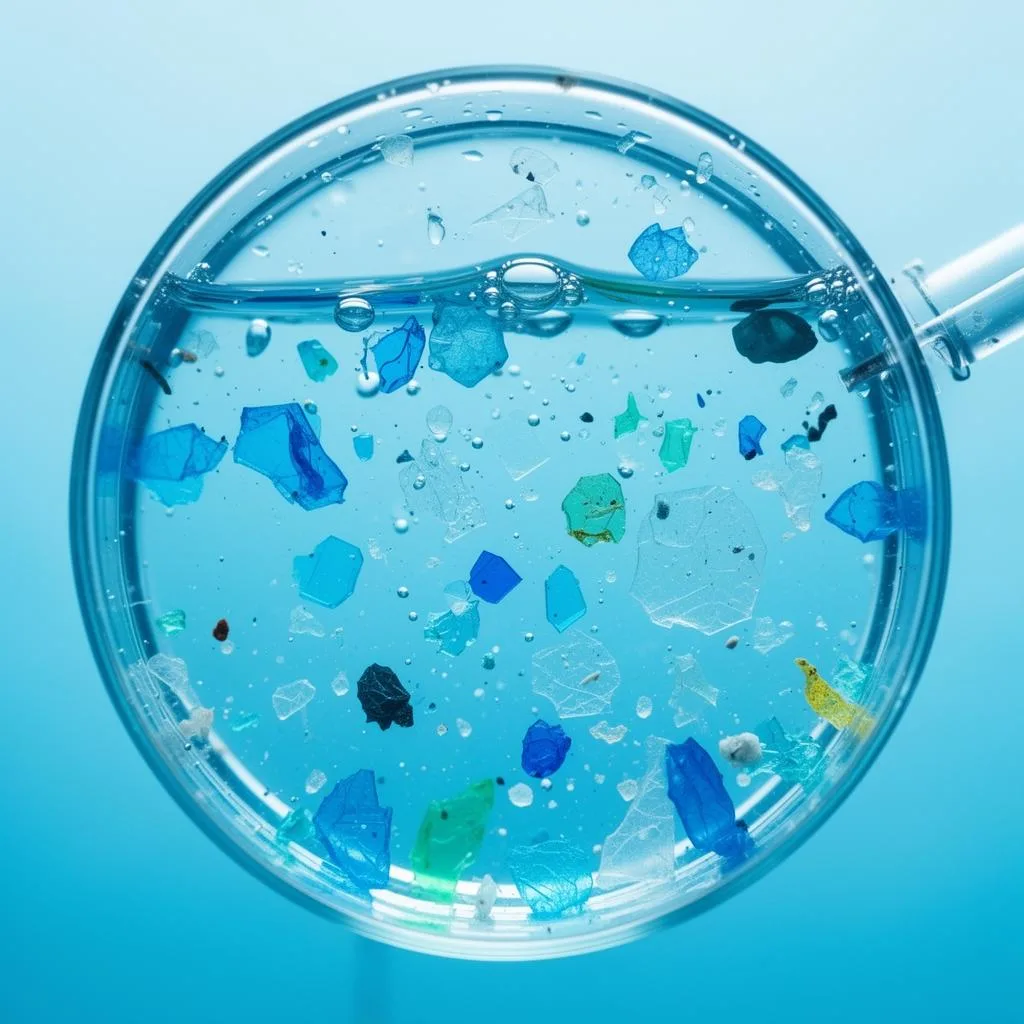
Water Quality Month in 2026 lands at a time when U.S. consumers and brands feel water concerns in daily life. Microplastics, which are plastic particles smaller than 5 millimeters, have been detected in tap water, bottled water, and human tissue. Yet the tools used to measure them cannot cover the full size range that regulators describe. That gap reflects a hard technical limit, not a lack of effort by brands or laboratories. Clear awareness of this limit is the starting point for any honest conversation about water quality.
The EPA defines microplastics as plastic particles ranging from 5 millimeters down to 1 nanometer, which is roughly the width of a strand of human hair divided by 80,000. Nanoplastics, a subset smaller than 1 micrometer, are even harder to detect and cannot be seen by the human eye. Despite this broad definition, the EPA omitted microplastics from its proposed sixth Unregulated Contaminant Monitoring Rule published July 1, 2026. The agency cited the lack of a validated national test method for public water systems.

The UN Environment Programme lists five core parameters for monitoring water quality under SDG 6.3.2: dissolved oxygen, electrical conductivity, nitrogen or nitrate, phosphorus, and pH. These indicators show whether water supports ecosystem function and human health. None of them measure plastic particles. Microplastics sit in a separate measurement category that routine monitoring systems were never built to cover.
Routine laboratory analysis usually covers a broader mix of physical, chemical, and biological markers. Atlas Scientific’s January 2026 guide lists physical parameters such as turbidity, total dissolved solids (TDS), temperature, and conductivity, along with chemical parameters including pH, dissolved oxygen, alkalinity, and chlorine. Routine wastewater analysis often focuses on pH, COD (chemical oxygen demand), ammonia nitrogen, total phosphorus, total nitrogen, and TSS (total suspended solids). Plastic particle content still does not appear in these standard panels.
Water quality varies widely by region and by contaminant. A Rosenblum et al. (2024) analysis of more than six million U.S. monitoring samples found that inorganic contaminants and disinfection byproducts create the primary health risks in drinking water, with PFAS and unregulated organics also driving concern. No single state ranks as the clear “worst” across all contaminants. Microplastics are not yet part of national compliance monitoring, so official state-by-state comparisons do not show plastic levels at all.
TDS, or total dissolved solids, measures the concentration of dissolved minerals and salts in water. EPA lists TDS as a non-enforceable secondary standard of 500 mg/L for aesthetic effects in drinking water and sets no level at which TDS is considered unsafe for consumption. TDS works as a proxy for mineral content. It does not measure plastic particles, which are solid and suspended rather than dissolved.
People often judge water quality by visible signs such as unusual color, odor, or taste. EPA secondary standards recommend potable water color of 15 color units or less but do not specify a dissolved oxygen concentration for potable water. Microplastic contamination does not create obvious color, smell, or taste changes. A 2018 study led by Sherri Mason at the State University of New York at Fredonia, published in Frontiers in Chemistry, found microplastics in 93% of 259 bottled water samples across eleven brands, even though the water looked clear and odorless. A separate peer-reviewed 2018 study by Kosuth, Mason, and Wattenberg in PLOS ONE found human-made particles in 81% of 159 tap water samples from five continents. Plastic-related water quality problems stay hidden from the senses and from most standard monitoring tools.
The measurement gap between regulatory definitions and validated methods affects real products and claims. Some state water boards define microplastics in drinking water as solid plastic material with particles that have at least three dimensions greater than 1 nanometer and less than 5,000 micrometers. The two published analytical methods validated against that definition cover only a fraction of that size range. The table below shows how the validated detection range of each method falls far short of the regulatory definition.
| Method | Validated Range |
|---|---|
| SWB-MP1-rev1, Infrared spectroscopy | Greater than 50 µm through 5,000 µm |
| SWB-MP2-rev1, Raman spectroscopy | Greater than 20 µm through 5,000 µm |
The regulation reaches down to 1 nanometer, while the best validated methods start at 20 or 50 micrometers. The fraction between 1 and 20 micrometers is not validated under either method. Everything below 1 micrometer, the nanoplastic range, currently sits beyond reliable commercial measurement. A 2026 critical review in Water, Air, & Soil Pollution confirmed that methodological differences strongly affect reported microplastic concentrations and that smaller particles, especially nanoplastics, are routinely underrepresented.
Many water and simple-liquid brands already hold independent laboratory data that they paid for and used internally. They often lack a trusted way to share those results publicly. A laboratory report that states “no microplastics detected” means no particles were found above that instrument’s detection floor, for the polymers it screened, in the lot it tested. It does not prove that no plastic is present at all sizes or for all polymer types. Buyers and retailers tend to view self-reported results as marketing instead of evidence. No independent party has confirmed whether the method fit the product, whether contamination controls worked, or what the result truly supports.
The Wellness Quality Institute’s Plastic-Free Pathway Verification does not certify that a product contains zero plastic, microplastics, or nanoplastics. It shows that the company is on a verified pathway toward plastic-free standards. Verification applies only to the reviewed products, submitted datasets, tested ranges, polymer panels, production or sampling periods, and supporting controls. WQI verification is not a state approval, government certification, or health or safety certification.
The World Health Organization’s 2019 assessment, Microplastics in Drinking-Water, reported low concern for physical particles, associated chemicals, and micro-organisms on the limited evidence available. The report also stressed that this conclusion rests on incomplete information and that more research is urgently needed. Laboratory and animal studies suggest possible mechanisms such as oxidative stress and systemic inflammation, as summarized in a rapid systematic review of microplastic exposure effects. These findings do not yet prove cause-and-effect links in humans, which is why health statements in this field must remain cautious.
Global plastics production roughly doubled from 234 million tonnes in 2000 to about 460 million tonnes in 2019, according to the OECD’s Global Plastics Outlook. Production, use, and waste are projected to rise a further 70% by 2040 on current paths. The scale of plastic in the environment makes exposure through water effectively unavoidable. That reality makes the quality of measurement and verification systems even more important.
The Wellness Quality Institute (WQI) is an independent verification body that reviews companies’ existing third-party laboratory data on plastic and microplastic content against a defined standard. This review helps brands show real progress toward plastic-free standards without claiming total absence of plastic. WQI’s core program, Plastic-Free Pathway Verification (PFPV), follows the standard WQI-CS-01. This standard aligns with a state water board’s drinking-water microplastics reference framework as a technical reference point. The state framework serves only as a technical anchor. Verification remains available to U.S. companies nationwide, and the state has not created, approved, authorized, or endorsed WQI or its standard.
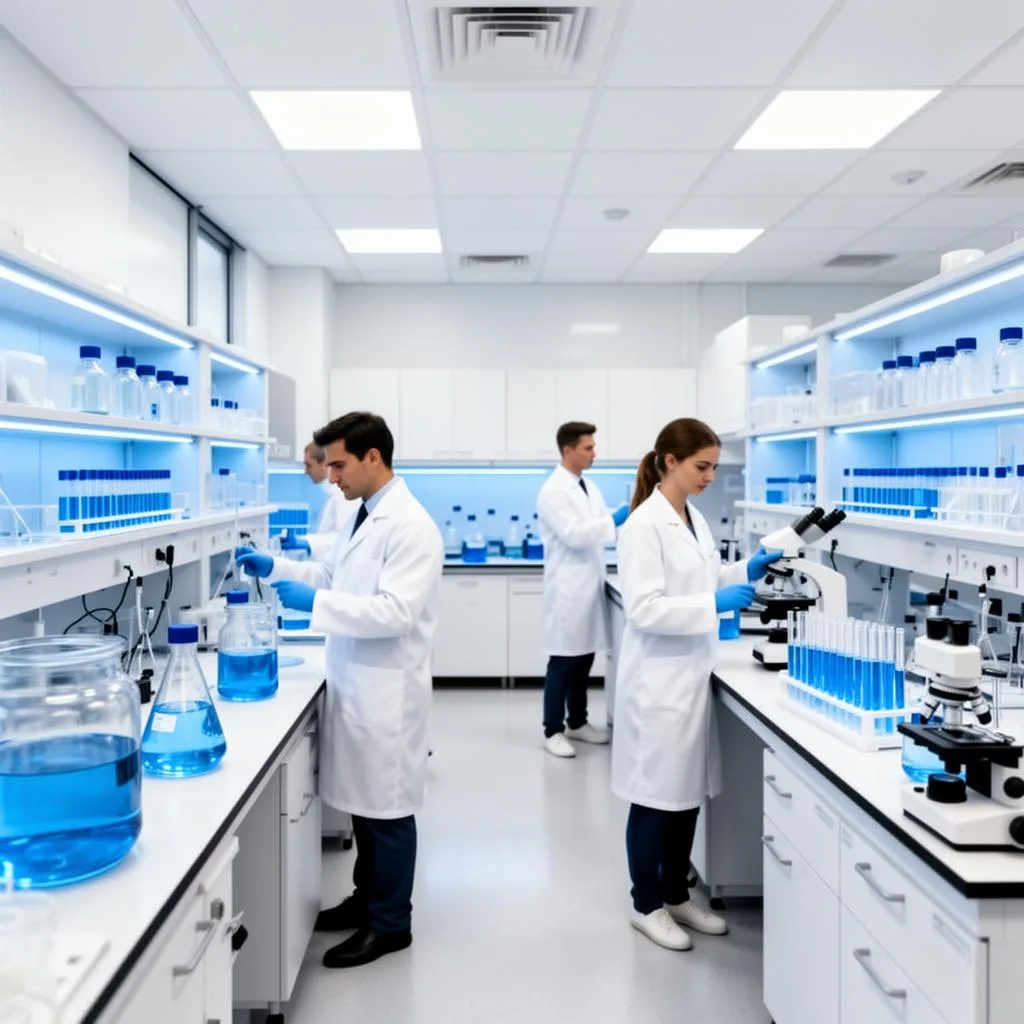
Independent review turns a laboratory report into a reviewed finding with approved claim language attached. University of Georgia Extension Bulletin 939 (July 2026) concludes that independent, standards-based verification is needed to make water-quality performance claims defensible instead of relying on manufacturer self-statements. The same principle applies to microplastic claims on consumer products.
The WQI review looks at laboratory qualification, analytical method, product matrix (the type of liquid tested), sampling approach, tested particle-size range, target polymer panel (the specific plastic types screened), reporting limits, blank results and contamination controls, replication, chain of custody, data recency, and product scope. The minimum polymer panel reviewed includes polyethylene (PE), polypropylene (PP), polyethylene terephthalate (PET), polystyrene (PS), PVC, nylon (PA), polycarbonate (PC), and PMMA. These are the most common plastic types found in consumer products and packaging.
Every review produces one of two outcomes. Standard Met provides a verification decision, a scope-locked license to use the WQI mark, a public registry listing, and approved claim language. Standard Not Met remains private, is never described as a failed product, and stays open to resubmission with updated information. Verification applies only to the reviewed product, dataset, tested particle-size range, polymer panel, and production period. A company cannot extend a single dataset to a company-wide or product-line claim.
One assessment fee covers review, verification decision, and registry listing. There is no separate mark-license or registry fee. Independent laboratory testing is arranged and billed separately by a qualified independent laboratory. Payment of the assessment fee does not guarantee a verification decision.
Laboratories qualify by accreditation tier. State ELAP (Environmental Laboratory Accreditation Program) accreditation for the applicable microplastics method is preferred. ISO/IEC 17025-accredited laboratories, which follow the international standard for laboratory competence, are accepted when the method and matrix sit explicitly within accredited scope. Other qualified independent laboratories may be conditionally accepted through a documented method-equivalence review.
The verification period lasts 24 months from the sampling date of the most recent accepted dataset. Continued claim use after expiration requires re-verification using current data. This approach reflects the reality that a clean result on one production lot does not guarantee the next lot.
Detection and absence describe different types of claims. Finding a plastic particle requires one confirmed result. Proving that no plastic is present would require certainty about everything the method cannot see, including particles below the detection floor, polymers outside the tested panel, and production lots that were not sampled. As noted earlier, current validated methods cannot detect particles below roughly 20–50 micrometers, which leaves the nanoplastic range and much of the regulatory definition unmeasurable. No laboratory can rule out what its instruments cannot reach, so no honest claim of total plastic absence is scientifically available today.
This phrase means no particles were found above that instrument’s detection floor, for the polymer types it screened, in the specific lot it tested. A method validated above 50 micrometers cannot see anything smaller, so “none detected” can still appear alongside particles that exist below that size. The result stays bounded by the method’s limits, not by the product’s actual content across all particle sizes and polymer types. Clear understanding of what a result does and does not prove is the reason independent review of the method behind a result matters as much as the result itself.
No enforceable federal standard exists today. The EPA has not set a national maximum contaminant level or treatment technique for microplastics in U.S. drinking water. EPA announced the draft CCL 6, which includes microplastics as a chemical group, on April 2, 2026. This step signals regulatory attention but does not create an enforceable limit under the Safe Drinking Water Act. The EPA also omitted microplastics from its proposed sixth Unregulated Contaminant Monitoring Rule, again citing the absence of a validated national test method for public water systems. A state water board’s drinking-water microplastics standard currently offers the most detailed public reference framework, and WQI uses this framework as a technical anchor for its review criteria, not as a geographic requirement.
A brand whose dataset receives a Standard Met outcome may state that its data was reviewed and accepted under The Wellness Quality Institute’s Plastic-Free Pathway Verification standard. The brand may use the approved mark “WQI Plastic-Free Pathway Verified” for the specific products that met the standard and may use approved result language tied to its Verification Scope. Every public claim links to a registry ID that any buyer, retailer, or journalist can check independently. A brand may not say “plastic-free,” “microplastic-free,” “zero plastic,” or “certified,” and may not extend a single product’s result to a product line or the entire company. The verification applies only to the reviewed product, dataset, tested particle-size range, polymer panel, and production period.
National Water Quality Month in 2026 arrives at a time when the gap between what regulators define and what laboratories can measure carries real consequences for brands making plastic-related claims. A state water board’s definition reaches to 1 nanometer, while the best validated methods begin at 20 or 50 micrometers. Everything below that measurement floor remains invisible to commercial analysis. No product can be certified plastic-free, because the technical limits discussed throughout this article make absolute absence claims scientifically unsupportable.
This technical limit does not excuse inaction. Many U.S. water and simple-liquid brands already hold independent laboratory data that shows genuine progress. Independent, standards-based review of that existing data, assessed against defined criteria for particle size, polymer type, method quality, and contamination controls, offers one practical route to turn a raw laboratory result into a scope-locked, publicly checkable statement. This approach creates a bridge between awareness and defensible claims, and it is the service that The Wellness Quality Institute was built to provide.
Water Quality

Learn how to test city or well water, read results, and spot microplastics. The Wellness Quality Institute helps brands verify plastic-related claims.
Read article
The Wellness Quality Institute explains California's microplastics rules—MCLs, notification levels & basin plans—to keep your claims defensible.
Read article
The Wellness Quality Institute helps brands verify water quality claims with independent testing. Build consumer trust with solid evidence. Start now.
Read article