
How to Avoid Greenwashing Lawsuits on Plastic Claims
Avoid greenwashing lawsuits over plastic claims. The Wellness Quality Institute turns real data into defensible, FTC-compliant environmental claims.
Read articleCalifornia's microplastics rule takes effect Oct 1, 2026. The Wellness Quality Institute helps brands prepare with WQI-CS-01 verification. Start now.

Written by: Scott Steveson, Specialist
California DTSC added microplastics to its Candidate Chemicals List effective October 1, 2026, and the listing creates no immediate testing mandates or product restrictions.
The listing serves as a first regulatory step for future Priority Product evaluations, so brands have a preparation window rather than a compliance deadline.
Before 2027, brands can map polymer-containing SKUs, request supplier declarations, review existing lab data, implement lot traceability, and set up change-notification protocols.
Existing third-party laboratory data can support independent review under the Wellness Quality Institute’s Plastic-Free Pathway Verification standard (WQI-CS-01) without new testing when the data meets quality criteria.
Learn how existing lab data can support verification under WQI-CS-01 without requiring new testing.
This table outlines a practical preparation sequence for U.S. brands with polymer-containing products. These steps are optional examples that organizations may choose to adopt based on their own risk assessment and business context, not regulatory mandates.
|
Row |
Action |
Timeline |
Evidence Needed |
Verification Tie-in |
|---|---|---|---|---|
|
1 |
Map polymer-containing SKUs |
Q4 2026 |
Internal inventory |
Scope definition for review |
|
2 |
Request supplier declarations |
Q4 2026 |
Certificate of Analysis (CoA), Safety Data Sheet (SDS), polymer type |
Input for dataset review |
|
3 |
Review existing lab data |
Q4 2026 |
Analytical method, particle-size range, blank controls |
WQI-CS-01 assessment |
|
4 |
Implement lot traceability |
Q1 2027 |
Batch records, chain of custody |
Scope lock requirement |
|
5 |
Establish change-notification protocol |
Q1 2027 |
Written supplier agreements |
Ongoing verification maintenance |
|
6 |
Prepare alternatives-analysis support |
Q1 2027 |
Material substitution records |
Future Priority Product readiness |
|
7 |
Submit dataset for verification |
Q1–Q2 2027 |
Qualified lab report |
WQI Plastic-Free Pathway Verification |
The DTSC’s June 18, 2026 rulemaking defines microplastics by physical form and size rather than by specific chemical identity. The listing covers two categories:
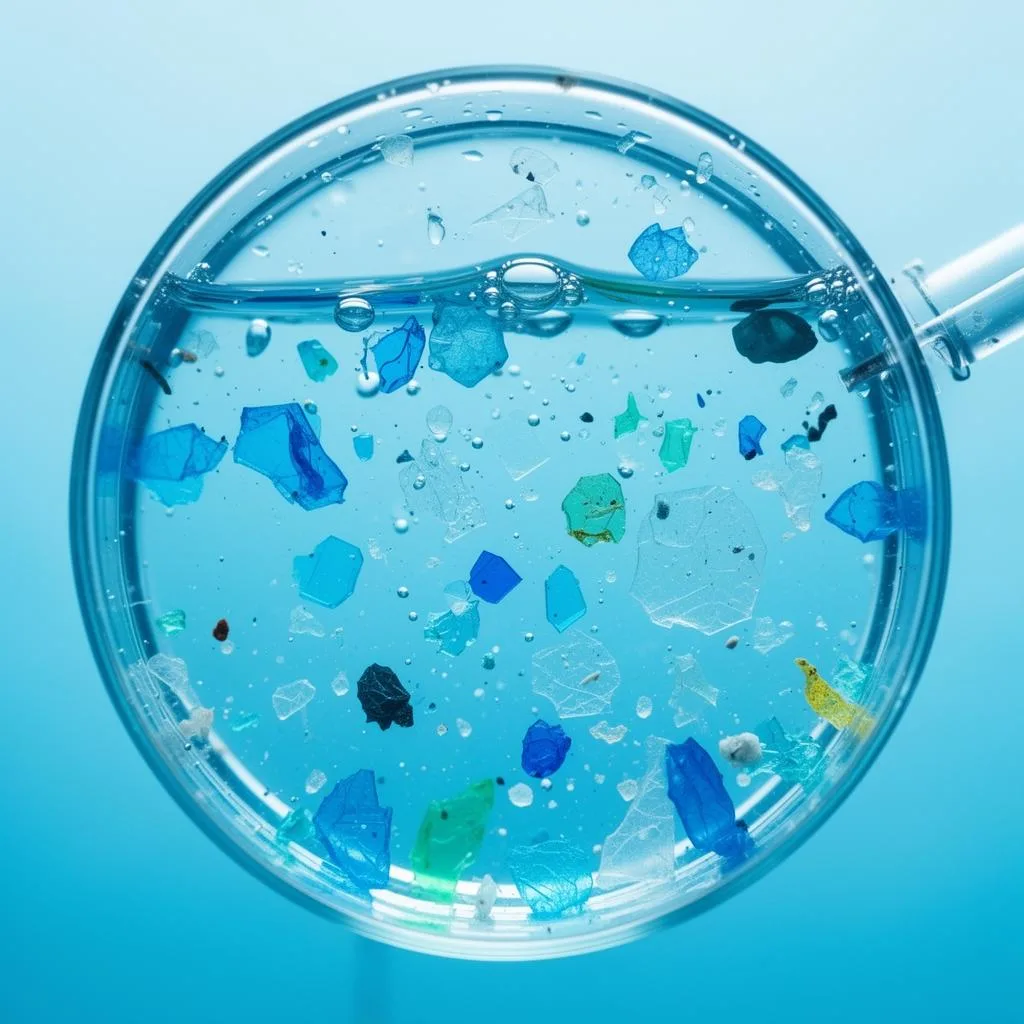
Plastics intentionally manufactured at less than 5 millimeters in their longest dimension, such as microbeads, polymer powders, plastic pellets, and scrubbers (primary microplastics).
Plastics in that size range generated through fragmentation, degradation, or breakdown of larger plastic items (secondary microplastics).
The rule does not list exclusions or carve-outs based on physical form or size.
A separate technical reference point is the California State Water Board’s drinking-water microplastics framework. That framework defines microplastics as solid polymeric material with particles that have at least three dimensions greater than 1 nanometer and less than 5,000 micrometers. The Wellness Quality Institute aligns its review standard, WQI-CS-01, with this framework because it represents a stringent and credible public reference for analytical methods available today. California did not create, approve, authorize, or endorse the Wellness Quality Institute or its standard, and no content from the Wellness Quality Institute implies otherwise.

DTSC’s addition of microplastics to the Candidate Chemicals List does not by itself create immediate regulatory obligations for chemical manufacturers or product manufacturers. The listing functions as a first step that enables DTSC to later evaluate specific consumer products for possible designation as Priority Products through a separate rulemaking process.
Obligations under California’s Safer Consumer Products framework attach only after a product is designated a Priority Product. At that point, the responsible entity, typically the manufacturer or brand owner, must submit a Priority Product Notification within approximately 60 days of the designation’s effective date and then conduct an Alternatives Analysis.
The practical implication is clear: brands have a preparation window, not a compliance deadline. Using that window to organize existing data and traceability records creates a more defensible position when questions arise.
Market pressure often moves faster than regulation, so preparation matters even without immediate mandates. Retailer and partner requests for microplastics information are already arriving at procurement desks. Brands in or near these categories should expect upstream data requests before any formal designation occurs.
The following sample questionnaire illustrates the type of information a downstream buyer or compliance team may request. It is an example framework, not a regulatory requirement.
Sample Supplier Microplastics Questionnaire
State whether your product contains intentionally added microplastics, such as microbeads, polymer powders, or pellets, and identify the polymer type, particle size range, and function when present.
Explain whether your product or its packaging generates microplastics through fragmentation, degradation, or mechanical stress during normal use or disposal.
List the polymer types present in the product or its primary packaging and provide the polymer name and CAS number where available.
Indicate whether an independent, accredited laboratory has tested the product for microplastic content and, if so, provide the laboratory name, accreditation reference, analytical method used, particle-size range tested, and detection limits.
Confirm whether blank controls and chain-of-custody records are available for the testing referenced above.
Specify what lot or production period the available test data covers.
Describe whether your organization maintains a change-notification protocol for formula, packaging, or process changes that may affect microplastic content.
If DTSC eventually designates a product as a Priority Product, the responsible entity must conduct an Alternatives Analysis. That analysis compares the priority product against one or more alternatives to determine whether a safer and feasible substitute exists. Based on the results, DTSC may impose regulatory responses ranging from additional consumer information requirements to use restrictions, prohibitions on sale, end-of-life management requirements, or funding for green chemistry research.
Brands can start building the documentation foundation for a future Alternatives Analysis now. Useful preparatory records include:
Material substitution records that document any polymer or packaging changes already made.
Process change logs that identify engineering controls, filtration steps, or encapsulation measures implemented to reduce microplastic release.
Supplier declarations, safety data sheets, batch certificates of analysis, and accredited laboratory reports with raw data, detection limits, particle size bins, polymer identification confidence, blanks and controls, and chain-of-custody documentation.
Feasibility assessments for alternative materials or product designs, even at a preliminary stage.
All of these records depend on one foundational capability: knowing exactly which production lot each piece of data describes.
Lot-level traceability is the connective tissue between a laboratory result and a defensible market claim. Without that linkage, even rigorous testing data becomes legally weak because it proves only what was in the sample tested, not what is in the product sold today. The following checklist outlines practices that organizations may choose to adopt to establish that linkage.
Lot-Traceability Checklist
Maintain a core traceability file for every grade and batch that includes a Certificate of Analysis (CoA), Safety Data Sheet (SDS), Technical Data Sheet (TDS), lot history, delivery note, and purchase record.
Require that CoA lot numbers match the shipment and that lot numbers are preserved through purchase order, receipt, inspection, storage, picking, and delivery.
Ensure the purchase order, warehouse receipt, delivery note, and Certificate of Analysis share a common lot identifier.
Retain sample lots and maintain a short-chain traceability system that can correlate any field findings to a specific polymer batch.
Retain relevant compliance records, including declarations, supplier correspondence, and responses to customer requests, for at least 10 years after the last supply.
Change-Notification Protocol
Maintain a change log for new restrictions, revised SDS documents, and updated supplier statements, assign an owner to each open issue, and communicate changes to sales, warehouse, purchasing, and customer service teams.
Conduct a monthly review to confirm every active grade has a current CoA, SDS, and TDS, and conduct a quarterly review covering supplier approvals, declarations, open complaints, and regulatory changes.
Embed quality checkpoints in procurement workflows so purchase orders remain open until CoAs and inspection records are uploaded and approved.
Many brands already hold laboratory data on microplastic content, yet they lack an independent review that converts that data into a defensible response. A laboratory report alone does not become a market claim. Self-reported results carry less weight than independently reviewed data, and without independent review, even rigorous data reads as marketing.
The Wellness Quality Institute’s Plastic-Free Pathway Verification, governed by the standard WQI-CS-01, independently reviews a company’s existing laboratory dataset, testing methodology, product scope, and supporting controls against defined criteria focused on particle size and polymer type. These criteria align with the California State Water Board’s drinking-water microplastics reference framework. The Wellness Quality Institute does not run laboratory tests. It reviews data that a qualified independent laboratory has already produced.

The review examines five categories of evidence, and each category addresses a specific dimension of data quality:
Laboratory qualification and accreditation tier, such as California ELAP or ISO/IEC 17025 with method and matrix in scope, which establishes technical competence.
Analytical method and its suitability for the product matrix, such as µ-FTIR or Raman spectroscopy, which confirms that the method can detect what the company claims to measure.
Tested particle-size range and target polymer panel, with a minimum panel of PE, PP, PET, PS, PVC, PA, PC, and PMMA, which defines the scope of the claim.
Reporting limits, blank results, spike recoveries, replicates, and chain of custody, which demonstrate data integrity.
Data recency and production or sampling period, which establish how current and relevant the data is to products in the market.
The review produces one of two outcomes. A Standard Met outcome carries a verification decision, a scope-locked license to use the WQI mark, a public registry listing, and approved claim language. A Standard Not Met outcome remains private, is never described as a failed product, and can be resubmitted with updated information.
The verification confirms that the company is on a verified pathway toward plastic-free standards, not that products contain zero plastic. See the required disclaimer language in the claims section below for the full explanation.
Submit your existing laboratory dataset for independent review under the Plastic-Free Pathway Verification standard.
The distance between a defensible claim and a liability often comes down to a single word. The following guidance applies to any brand discussing microplastics data, whether or not it has pursued independent verification.
Prohibited claims, which brands should never use:
“Plastic-free” or “microplastic-free” as a product claim.
“Certified plastic-free,” “zero plastic,” or “100% plastic-free.”
“Certified” or “certification” in connection with the Wellness Quality Institute verification.
Any claim implying California approval, government certification, or health or safety certification.
Any claim implying the Wellness Quality Institute performed the laboratory testing.
Any company-wide or product-line claim supported by a single dataset.
Compressing “Plastic-Free Pathway Verified” into “plastic-free verified” or “verified plastic-free,” because the word “pathway” must always appear.
Approved language examples for Standard Met products only, within registered scope:
“Reviewed and accepted under the Wellness Quality Institute’s Plastic-Free Pathway Verification standard.”
“The Wellness Quality Institute Plastic-Free Pathway Verified” for the specific products that met the standard.
“Dataset reviewed against a standard aligned with the California State Water Board’s drinking-water microplastics reference framework.”
“Verified against the Wellness Quality Institute’s defined review criteria.”
Required disclaimer wherever verification is discussed:
The Wellness Quality Institute Plastic-Free Pathway Verification does not certify that a product contains zero plastic, microplastics, or nanoplastics. It shows that the company is on a verified pathway toward plastic-free standards. Verification applies only to the reviewed products, submitted datasets, tested ranges, polymer panels, production or sampling periods, and supporting controls. The Wellness Quality Institute verification is not a California approval, government certification, or health or safety certification.
Frequently Asked Questions
What does the DTSC microplastics listing actually require of suppliers today?
As explained in the section above, the listing creates nothing in terms of direct legal obligations today. The key point is that this is a preparation window, not a compliance deadline. See “What the Current DTSC Listing Does and Does Not Require” for the full regulatory mechanism.
How does the DTSC listing relate to the California State Water Board drinking-water framework?
These are separate programs that serve different purposes. DTSC regulates consumer products under Safer Consumer Products authority, while the State Water Board monitors drinking water suppliers. They share subject matter but operate under different statutory frameworks and impose obligations on different entities. The Wellness Quality Institute aligns with the Water Board framework for analytical rigor, not because the programs are linked. See “How DTSC Defines Microplastics and What It Excludes” for the technical details.
What documentation should suppliers prepare before Priority Product designations?
The most defensible preparation combines three categories of documentation. First, polymer and material records include Certificates of Analysis, Safety Data Sheets, Technical Data Sheets, and supplier declarations tied to specific grades, plants, and revision dates, with lot numbers preserved through the full supply chain. Second, laboratory data includes independent test reports that specify the analytical method, particle-size range tested, detection limits, blank controls, chain of custody, and the production period the data covers. Third, process and change records include material substitution logs, change-notification agreements with suppliers, and any engineering controls implemented to reduce microplastic release. Document retention of at least five to ten years provides a reasonable baseline for compliance-sensitive records. Brands that organize this documentation now are better positioned to respond to retailer requests, partner audits, or future regulatory inquiries, regardless of whether a Priority Product designation ever applies to their specific products.
Can existing laboratory data support a verification response without new testing?
Existing laboratory data can often support a verification response when it meets defined quality criteria. The Wellness Quality Institute review assesses whether the laboratory was appropriately qualified, whether the analytical method suited the product matrix, whether the tested particle-size range and polymer panel are adequate, and whether blank controls, spike recoveries, replicates, and chain-of-custody records are present. Many companies discover that their existing data supports a narrower or a stronger claim than they assumed.
When the dataset is incomplete or the method is inappropriate for the matrix, the review identifies what is missing and gives the brand a clear path to resubmission rather than a generic rejection. The key distinction is that a laboratory report alone does not become a defensible market claim. Independent review of that report against a published standard converts data into a claim a company can stand behind.
Conclusion: Turning a Regulatory Signal into a Prepared Response
The DTSC microplastics listing effective October 1, 2026 creates no immediate testing mandates or product restrictions. It creates a regulatory signal that DTSC has identified microplastics as a class of concern and opened the pathway to future Priority Product designations. Brands that use the preparation window to map polymer-containing SKUs, organize supplier declarations, review existing laboratory data, implement lot traceability, and establish change-notification protocols will be better positioned when upstream auditing requests arrive from retailers, partners, or regulators.
For brands that already hold laboratory data, the most immediate opportunity is converting that data into a defensible response through independent verification. The Wellness Quality Institute’s Plastic-Free Pathway Verification reviews existing third-party laboratory datasets against WQI-CS-01, a standard aligned with the California State Water Board’s drinking-water microplastics reference framework, and produces scope-locked, publicly registered verification decisions with approved claim language. A single assessment fee covers the review, verification decision, and registry listing, and independent laboratory testing is arranged and billed separately when needed.
As noted throughout this article, the verification does not certify zero plastic content. It confirms that the company is on a verified pathway supported by independently reviewed data.
Start your verification assessment and convert your laboratory data into a defensible market response.
Certification

Avoid greenwashing lawsuits over plastic claims. The Wellness Quality Institute turns real data into defensible, FTC-compliant environmental claims.
Read article
Avoid greenwashing risks. The Wellness Quality Institute helps you substantiate recyclable, compostable & plastic-free claims. Get verified today.
Read article
The Wellness Quality Institute helps retailers choose labs, interpret results, and make honest microplastics claims. Start testing with confidence.
Read article